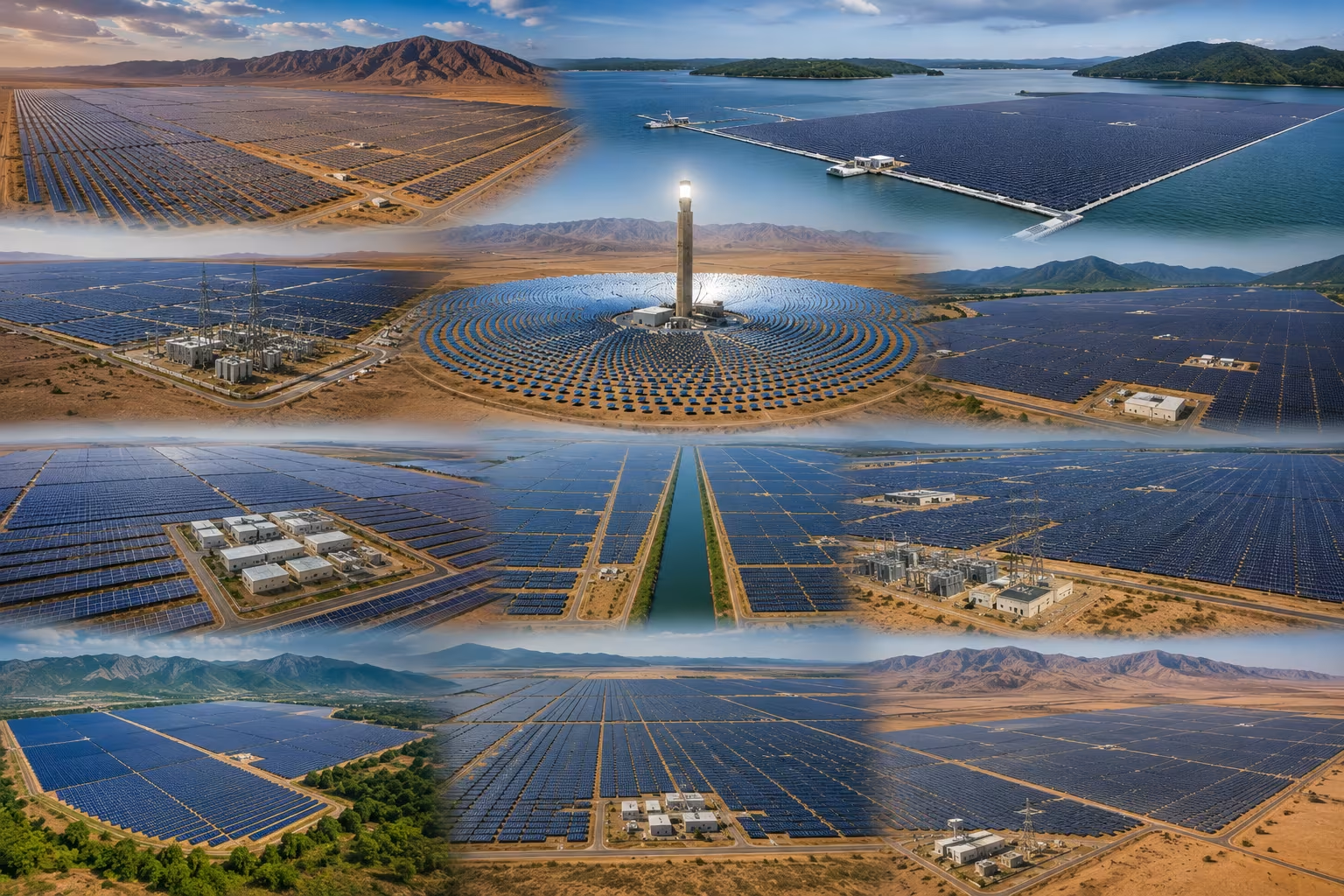
Solar power is no longer a small alternative energy source. Across the world, countries are building solar power plants at gigawatt scale to supply clean electricity to cities, industries, and national grids. These projects show how fast solar technology has grown in the last few years.
When people search for the world largest solar power plant or the biggest solar power plant in world, the answer can change depending on whether we are talking about one single solar plant, a solar park developed in phases, or a cluster of multiple solar projects in one region. In 2026, China, UAE, India, and Egypt continue to dominate the global list because they have large open land, strong solar radiation, and major renewable energy targets.
This list explains the top 10 largest solar power plant in the world in simple language, based on widely reported operational capacities and official project updates where available. Since many solar parks are still expanding, rankings can shift as new phases are commissioned.
Top 10 Largest Solar Power Plants in the World in 2026
1. Mohammed bin Rashid Al Maktoum Solar Park, UAE
The Mohammed bin Rashid Al Maktoum Solar Park in Dubai is one of the most important solar projects in the world. As per DEWA’s 2026 update, the solar park’s total production capacity has reached 3,860 MW, and it is planned to exceed 8,000 MW by 2030. This makes it one of the largest operational solar parks globally in 2026.
This project is important because it is being developed in phases and uses the Independent Power Producer model. For users, the simple learning is that solar energy is no longer limited to small systems. A single solar park can now support a large part of a city’s clean energy plan and reduce millions of tonnes of carbon emissions over time.
2. Xinjiang Solar Farm, China
China’s Xinjiang solar farm came online in 2024 and was reported by Reuters as the world’s largest solar farm at that time. The project has a capacity of 3.5 GW and is located in the desert area near Urumqi, the capital of Xinjiang. Reuters also reported that the plant covers 32,947 acres and can generate around 6.09 billion kWh of electricity every year.
This project shows why China is leading in utility scale solar. Xinjiang has strong sunlight and large desert land, making it suitable for very large solar farms. The electricity generated from such projects can support power demand in other regions through transmission networks.
3. Golmud Solar Park, China
Golmud Solar Park in Qinghai, China, is often listed among the largest solar parks in the world. Different sources report different figures because the Golmud area includes multiple solar projects and clusters developed over time. Some 2026 global solar farm references place Golmud at around 2,800 MW, while older technical references describe the wider Golmud desert cluster as having many solar plants with combined capacity above 1,800 MW AC.
The reason Golmud is important is its location. Qinghai has high altitude, open land, and good solar exposure. Cooler temperatures can also help solar panels work more efficiently compared to extremely hot locations. This makes the region suitable for large solar power generation.
4. Bhadla Solar Park, India
Bhadla Solar Park in Rajasthan is India’s most famous large solar project and one of the biggest solar power plants in the world. It is located in the Thar Desert and has an installed capacity of about 2,245 MW. Bhadla is important because Rajasthan has very high solar radiation, dry weather, and large open land, which makes it suitable for solar parks.
For India, Bhadla is a strong example of how desert land can be used for clean electricity generation. The project has helped India show global leadership in large scale solar development. It also proves that solar can work at a massive level when land, grid connection, policy, and private investment come together.
5. Huanghe Hydropower Hainan Solar Park, China
The Huanghe Hydropower Hainan Solar Park in Qinghai, China, is another major project in the global solar list. The project is widely reported at around 2.2 GW capacity and includes energy storage support. It is part of a larger renewable energy development plan in Qinghai.
This plant matters because it shows the next direction of solar power. Large solar parks are now being planned with storage, so the electricity can be managed better even when sunlight changes. This is important because solar power generation is high during the day but drops at night.
6. Pavagada Solar Park, India
Pavagada Solar Park, also called Shakti Sthala, is located in Karnataka’s Tumkur district. The project has an operational capacity of around 2,050 MW and is spread over a large semi dry land area. The Government of India’s PIB also mentioned Pavagada as a 2,050 MW park developed under the solar park scheme.
Pavagada is important not only because of its size, but also because of its land leasing model. Instead of fully acquiring land, the project involved leasing land from farmers in many cases. This made it a major example of how large renewable projects can be developed with local participation, although such projects still need careful planning around jobs, land use, and community benefits.
7. Benban Solar Park, Egypt
Benban Solar Park is located near Aswan in Egypt and is one of Africa’s largest solar projects. Masdar describes Benban as having a total combined capacity of about 1.8 GW, while many other references mention around 1.65 GW installed capacity. The project is made up of multiple solar plants within one large solar park.
Benban is important because it shows how solar can support clean energy growth in Africa. Egypt has strong sunlight and large desert areas, making it suitable for utility scale solar. Projects like Benban help reduce dependence on fossil fuel based power and support national renewable energy plans.
8. Tengger Desert Solar Park, China
Tengger Desert Solar Park is located in Zhongwei, Ningxia, China. It is commonly reported with a capacity of around 1,547 MW, making it one of the most recognised desert based solar projects in the world. The project is often called the “Great Wall of Solar” because of its scale and desert location.
The biggest learning from Tengger is how unused desert land can be converted into a clean electricity generation area. Desert solar projects usually get strong sunlight and less shading, but they also need good planning for dust, cleaning, transmission, and long term maintenance.
9. Noor Abu Dhabi Solar Plant, UAE
Noor Abu Dhabi is one of the world’s largest standalone operational solar plants. The official Noor Abu Dhabi website mentions a total capacity of 1.2 GW and more than 3.3 million solar panels at one site. The plant started commercial operations on April 30, 2019, and supplies clean energy under a long term power purchase agreement.
This project is important because it is a single site solar plant, not just a large cluster spread across many project blocks. It shows how the UAE is using open desert land and modern solar technology to reduce dependence on conventional power sources.
10. Kurnool Ultra Mega Solar Park, India
Kurnool Ultra Mega Solar Park is located in Andhra Pradesh and has a capacity of around 1,000 MW. It was once known as one of the largest single location operational solar parks in the world. The project helped India prove that gigawatt scale solar parks can be built and connected to the grid successfully.
Kurnool remains important because it was one of India’s early large solar success stories. It helped build confidence for bigger solar projects in Rajasthan, Karnataka, Gujarat, and other states. For Indian users, projects like Kurnool show that solar power is not experimental anymore. It is already working at national scale.
Final Thoughts
The largest solar plant projects in the world show how serious countries have become about clean electricity. From Dubai and Xinjiang to Bhadla, Pavagada, Benban, and Noor Abu Dhabi, these projects prove that solar can power more than just homes. It can support cities, industries, and national grids.
For users, the main takeaway is simple: if solar can work at this massive global scale, rooftop solar can also become a practical and reliable option for homes, shops, offices, and industries when designed and installed properly.
FAQs on Largest Solar Power Plants in the World
Which is the largest solar power plant in the world in 2026?
In 2026, the Mohammed bin Rashid Al Maktoum Solar Park in Dubai is among the largest operational solar parks by reported production capacity, with DEWA stating that it has reached 3,860 MW. China’s Xinjiang solar farm is also one of the biggest single solar farms, with 3.5 GW capacity reported by Reuters.
Which country has the largest solar power plant?
China and the UAE are currently among the leading countries in very large solar power plants. China has major projects like Xinjiang, Golmud, Huanghe Hainan, and Tengger, while the UAE has Mohammed bin Rashid Al Maktoum Solar Park and Noor Abu Dhabi.
Which is the largest solar power plant in India?
Bhadla Solar Park in Rajasthan is generally considered the largest solar power plant in India, with an installed capacity of about 2,245 MW. It is located in the Thar Desert, which has strong solar radiation and large open land.
Where is Bhadla Solar Park located?
Bhadla Solar Park is located in Rajasthan, India, in the Thar Desert region. The area is suitable for solar power generation because it receives strong sunlight and has dry desert conditions.
Why are large solar power plants built in deserts?
Large solar power plants are often built in deserts because deserts have strong sunlight, large open land, and low shading. These factors help solar panels generate more electricity. However, desert projects also need strong cleaning and maintenance because dust can reduce panel performance.
How much electricity can a large solar power plant generate?
Electricity generation depends on capacity, sunlight, location, panel efficiency, weather, and maintenance. For example, Reuters reported that China’s 3.5 GW Xinjiang solar farm can generate around 6.09 billion kWh of electricity annually.
What is the difference between a solar plant and a solar park?
A solar plant usually refers to one electricity generating project. A solar park can include many solar plants or project blocks developed in one large area with shared infrastructure like roads, substations, and transmission lines.
Are rooftop solar systems similar to large solar power plants?
The basic technology is similar because both use solar panels to convert sunlight into electricity. The difference is size and usage. Large solar plants supply electricity to the grid at MW or GW scale, while rooftop solar systems are smaller and mainly help homes or businesses reduce their electricity bills.
Which Indian states have the highest solar potential?
Rajasthan, Gujarat, Madhya Pradesh, Karnataka, Andhra Pradesh, and Maharashtra have strong solar potential because of good sunlight and available land in many regions. India’s major solar parks in Rajasthan, Karnataka, and Andhra Pradesh already show this potential.
Can solar power replace coal power completely?
Solar can reduce dependence on coal, but replacing coal completely requires storage, grid upgrades, transmission planning, and support from other clean energy sources. Solar generation is highest during the day, so battery storage, pumped hydro, and smart grid systems are important for round the clock clean power.