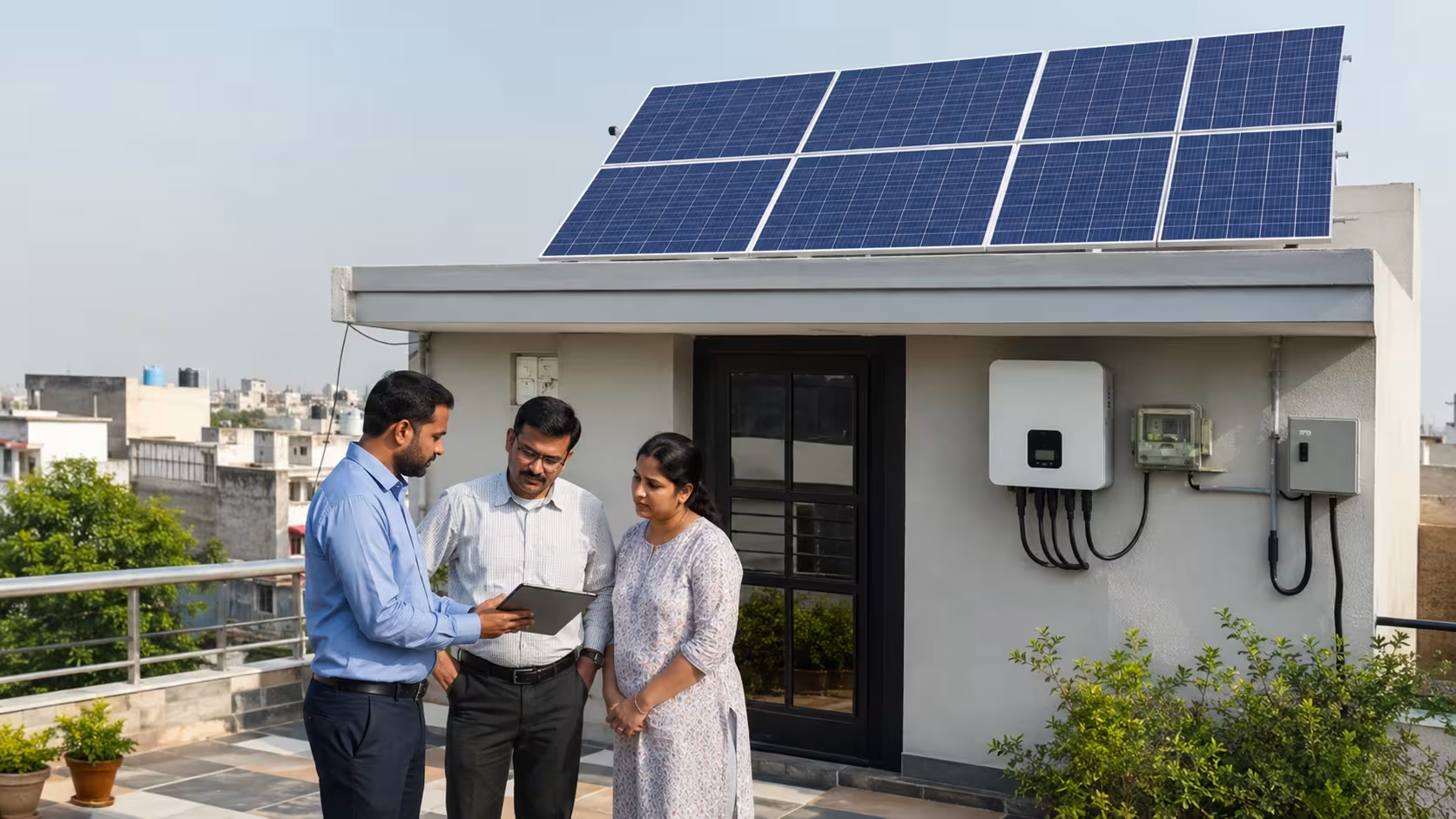
Your electricity bill keeps climbing every year. For many Indian homes, a monthly bill of ₹3,000 to ₹6,000 has become normal, especially when an AC, a fridge, a geyser, and the usual fans and lights run all day.
In cities where electricity bills are rising in Indore, rooftop solar is becoming a practical way to reduce monthly power costs. This is exactly why more families are switching to rooftop solar, and the 4 kW solar system has become a favourite for medium-sized homes like 2 and 3 BHK flats and houses.
In 2026, a 4 kW solar panel price in India ranges from about ₹2.4 lakh to ₹3.2 lakh before subsidy. After the government subsidy of ₹78,000, the real cost drops to roughly ₹1.6 lakh to ₹2.4 lakh. The exact price depends on your city, panel type, and the kind of system you choose.
Let's break it all down in simple terms, so you know exactly what you are paying for and how much you can save.
What Is a 4 kW Solar System? (Overview & Power Capacity)
A 4 kW solar system is a rooftop setup that turns sunlight into electricity for your home. It is made up of solar panels, an inverter, a mounting structure, wiring, and a meter. Together, these parts work like a small power plant on your roof.
A 4 kW system generates about 16 to 20 units (kWh) of electricity per day, which adds up to nearly 5,600 to 5,800 units a year. That is enough power to run a typical 2 to 3 BHK home with ease.
Did you know? A 4 kW solar system can comfortably power 1 to 2 air conditioners (1.5 ton), a refrigerator, a washing machine, a geyser, a TV, and all your fans and lights during the day.
4 kW Solar Panel Price in India (2026)
The cost of a 4 kW system mainly depends on the type of system you pick. There are three types: on-grid, off-grid, and hybrid solar system in India. Here is how their prices compare in 2026.
On-Grid, Off-Grid & Hybrid Price Comparison
| System Type | What It Does | Price Range (2026) |
|---|---|---|
| On-Grid (no battery) | Connects to the power grid. Sends extra power back for credits. | ₹2.4 lakh to ₹3.2 lakh |
| Off-Grid (with battery) | Stores power in batteries. Works during power cuts. | ₹2.8 lakh to ₹4.6 lakh |
| Hybrid (grid + battery) | Gives both bill savings and backup power. | ₹3.8 lakh to ₹5.2 lakh |
Pro Tip: For most city and town homes with a stable power supply, an on-grid system is the smartest choice. It costs the least, needs almost no maintenance because there are no batteries to replace, and is the only type fully eligible for the government subsidy.
Cost Breakdown
When you buy a 4 kW system, you are not just buying panels. Here is how the cost is divided across all the parts:
| Component | Share of Cost | Approx. Cost |
|---|---|---|
| Solar panels (modules) | 50 to 60% | ₹95,000 to ₹1,35,000 |
| Inverter | 15 to 25% | ₹28,000 to ₹55,000 |
| Mounting structure | 8 to 10% | ₹15,000 to ₹25,000 |
| Wiring & accessories | 8 to 10% | ₹12,000 to ₹25,000 |
| Installation & labour | 5 to 7% | ₹10,000 to ₹18,000 |
A good rule of thumb: a complete, installed on-grid system in 2026 costs around ₹55,000 to ₹80,000 per kW.
Factors That Affect 4 kW Solar Price
Two homes in two different cities can get very different quotes. Here is why the price changes:
- Panel type: Modern N-Type TOPCon panels cost a little more than older Mono PERC panels, but they make more power in less space. This is why understanding the types of solar panels in India becomes important before comparing final quotations.
- Inverter brand: A trusted brand costs more but lasts longer and works better.
- Your city and DISCOM: Local taxes, transport, and electricity board charges differ from state to state.
- Roof type and height: A tall building or a tricky roof needs a stronger, costlier structure.
- After-sales service: Better warranty and free maintenance visits add a little to the price but save you money later.
Did you know? To claim the government subsidy, your panels must be ALMM-listed (Approved List of Models and Manufacturers) and made in India (DCR panels). Always confirm this before you buy.
4 kW Solar Panel Price With Subsidy (PM Surya Ghar Yojana)
The government wants more homes to go solar, so the solar panel subsidy in India under the PM Surya Ghar: Muft Bijli Yojana pays a big part of your rooftop solar cost. This scheme was launched in February 2024 and is fully active in 2026.
How Much Subsidy You Get
The central subsidy works in fixed slabs:
| System Size | Central Subsidy |
|---|---|
| Up to 1 kW | ₹30,000 |
| Up to 2 kW | ₹60,000 |
| 3 kW and above | ₹78,000 maximum |
This means a 4 kW residential on-grid system gets the full ₹78,000 central subsidy.
Some states give an extra top-up on top of this. For example, homeowners in Uttar Pradesh and Delhi can get an additional ₹30,000 from the state, taking the total to ₹1,08,000. Special category states, like the North-East and hill states, can receive up to ₹1,17,000. Check your state's policy to know your exact amount.
Eligibility & Step-by-Step Application
You can claim the subsidy if you meet these simple conditions:
- You are an Indian homeowner and own the rooftop.
- The system is for a home, not a shop or factory.
- You use ALMM-listed panels and an MNRE-registered installer.
- Your home does not already have a subsidised solar system.
Here is how to apply:
- Register on the official portal:
pmsuryaghar.gov.in. - Enter your home and rooftop details.
- Choose an MNRE-registered installer like Sunheaven.
- Get the system installed.
- Submit your net-metering and commissioning papers.
- The subsidy comes straight to your bank account, usually within 30 days of approval.
Final Price After Subsidy (Sample Calculation)
Let's see what you actually pay. Imagine a 4 kW on-grid system priced at ₹2,60,000.
| Cost Component | Amount |
|---|---|
| System cost | ₹2,60,000 |
| Less central subsidy | minus ₹78,000 |
| Your final cost | ₹1,82,000 |
And if your state adds a ₹30,000 top-up, your cost can drop even further, close to ₹1,52,000.
4 kW Solar System on EMI / Solar Loan
Worried about paying the full amount at once? You don't have to. Banks and NBFCs now offer easy solar loans made just for rooftop systems.
- Low down payment: In many cases, your subsidy covers most of the upfront cost, so you start with very little out of pocket.
- Easy EMIs: Banks like SBI offer solar loans at around 7.25% interest, with tenures up to 60 months.
- Bill-matched payments: Your monthly EMI often matches the money you save on your electricity bill. So in a way, your bill pays for your solar system.
Pro Tip: When your EMI is close to your old electricity bill, you barely feel the cost, and once the loan is over, your power is almost free for the next 15+ years.
Savings, ROI & Payback Period
A 4 kW system is not just good for the planet. It is one of the smartest money decisions you can make.
- Monthly savings: You can save around ₹2,000 to ₹3,500 every month on your electricity bill.
- Yearly savings: That adds up to ₹24,000 to ₹42,000 a year.
- Payback period: Most homeowners recover their full cost in just 3 to 5 years.
- Long life: Good solar panels last 25 years or more. Even after 25 years, they still work at about 80 to 85% of their original power.
Here is the best part. Electricity tariffs in India rise by about 3 to 6% every year, while a good panel loses only about 1% of its power a year. So solar protects you from rising bills for decades.
Did you know? With net metering, the extra power your system makes during the day is sent back to the grid, and a smart meter reader helps record how much electricity is imported and exported. Your DISCOM gives you credit for it, around ₹2 to ₹3 per unit depending on your area, which lowers your bill even more.
Is a 4 kW System Right for Your Home?
Not every home needs the same system size. Here is how to know if 4 kW fits you.
Ideal Households & Load Requirement
A 4 kW system is best for:
- 2 to 3 BHK homes and small independent houses.
- Families with a monthly electricity bill of ₹3,000 to ₹6,000.
- Homes that run 1 to 2 ACs along with regular appliances.
Smaller homes with lower electricity usage may find the 3 kW solar system price in India more suitable, while homes with higher usage can compare it with the 5 kW solar system price in India before finalising the right size.
Number of Panels & Rooftop Space Needed
- Panels needed: About 8 to 13 panels, depending on their wattage. With modern 540W to 575W panels, you need only around 7 to 8 panels.
- Roof space: You need about 300 to 350 sq. ft. of shade-free roof.
- Sunlight: The roof should get 6 to 7 hours of direct sunlight a day. Avoid spots shaded by water tanks, walls, or trees.
A Simple Way to Size Your System
You can quickly check the right size for your home:
- Collect your electricity bills from the last 12 months.
- Add up all the units (kWh) used in the year.
- Divide that total by 1,400, the units one kW makes in a year.
- The number you get is the system size in kW you need.
This quick table makes it even easier:
| Units Used in a Year | Right System Size |
|---|---|
| 2,800 to 2,900 units | 2 kW |
| 4,200 to 4,350 units | 3 kW |
| 5,600 to 5,800 units | 4 kW |
| 7,000 to 7,250 units | 5 kW |
For example, if you use 5,700 units a year, a 4 kW system is a perfect match.
Benefits of a 4 kW Rooftop Solar System
Here are the biggest reasons homeowners choose a 4 kW system:
- Lower bills: A 4 kW system can cut your monthly electricity bill by up to 90%. Most of the power your home uses in the daytime now comes free from your own roof.
- Freedom from rising tariffs: Electricity rates climb almost every year, but your solar power stays free. Since you make your own electricity, price hikes affect you far less than your neighbours.
- Clean and green: A 4 kW system cuts a large amount of carbon every year, about the same as planting 60 to 65 full-grown trees. You get steady power while doing your bit for the planet.
- Higher home value: A home with rooftop solar is more attractive to future buyers. It comes with lower running costs, which makes it a strong selling point down the line.
Why Choose Sunheaven for Your 4 kW Solar Installation
Going solar is a 25-year decision, so the installer you pick matters as much as the panels. Here is what Sunheaven brings to your rooftop:
- MNRE-registered & ALMM-approved: We use only government-approved, high-efficiency panels so your subsidy is fully secure.
- Fewer panels, cleaner roof: With high-watt modern modules, your 4 kW system needs only 7 to 8 panels instead of 12 to 13. This means less clutter, less wiring, and lower cost.
- End-to-end support: From your first quote to the complete solar panel installation process in Indore, net metering, and subsidy paperwork, we handle the entire process for you.
- Transparent pricing & service: No hidden charges, plus regular maintenance visits and dependable warranty support that keep your system running at full power for years.
Note for Sunheaven team: please update the points above with your exact warranty terms, number of free service visits, and any special guarantees so the claims stay 100% accurate.
Conclusion
A 4 kW solar system is the right fit for most medium-sized Indian homes. In 2026, it costs about ₹2.4 lakh to ₹3.2 lakh, and after the ₹78,000 government subsidy, your real cost drops to around ₹1.6 lakh to ₹2.4 lakh.
It makes nearly 5,600 to 5,800 units of power a year, saves you thousands every month, and pays for itself in just 3 to 5 years.
The subsidy will not last forever, so this is the best time to switch. Ready to cut your electricity bill for good? Book a free solar consultation with Suheaven today and let our experts handle everything while you enjoy clean, low-cost power for the next 25 years.
Frequently Asked Questions (FAQs)
Q1. What is the 4 kW solar panel price in India in 2026?
A 4 kW on-grid solar system costs about ₹2.4 lakh to ₹3.2 lakh before subsidy. After the ₹78,000 central subsidy, the final price drops to roughly ₹1.6 lakh to ₹2.4 lakh, depending on your city and panel type.
Q2. How much subsidy is available for a 4 kW solar system?
Under the PM Surya Ghar: Muft Bijli Yojana, a 4 kW residential on-grid system gets the maximum central subsidy of ₹78,000. Some states, like UP and Delhi, add an extra top-up of around ₹30,000, taking the total to ₹1,08,000.
Q3. How many solar panels are needed for a 4 kW system?
You need about 8 to 13 panels. With modern high-power panels, 540W to 575W, only around 7 to 8 panels are required.
Q4. How much rooftop space does a 4 kW system need?
A 4 kW system needs about 300 to 350 sq. ft. of shade-free rooftop space with good sunlight.
Q5. How many units does a 4 kW solar system produce per day?
It produces about 16 to 20 units per day, which adds up to nearly 5,600 to 5,800 units a year.
Q6. How many ACs can a 4 kW solar system run?
A 4 kW system can run 1 to 2 air conditioners, 1.5 ton each, along with a fridge, washing machine, fans, and lights during the day.
Q7. Is a 4 kW solar system enough to run a home?
Yes. A 4 kW system makes about 5,600 to 5,800 units a year, which is enough to power a typical 2 to 3 BHK home.
Q8. What is the payback period of a 4 kW solar system?
Most homeowners recover their full cost in 3 to 5 years through monthly bill savings. After that, the power is almost free for the rest of the system's 25-year life.