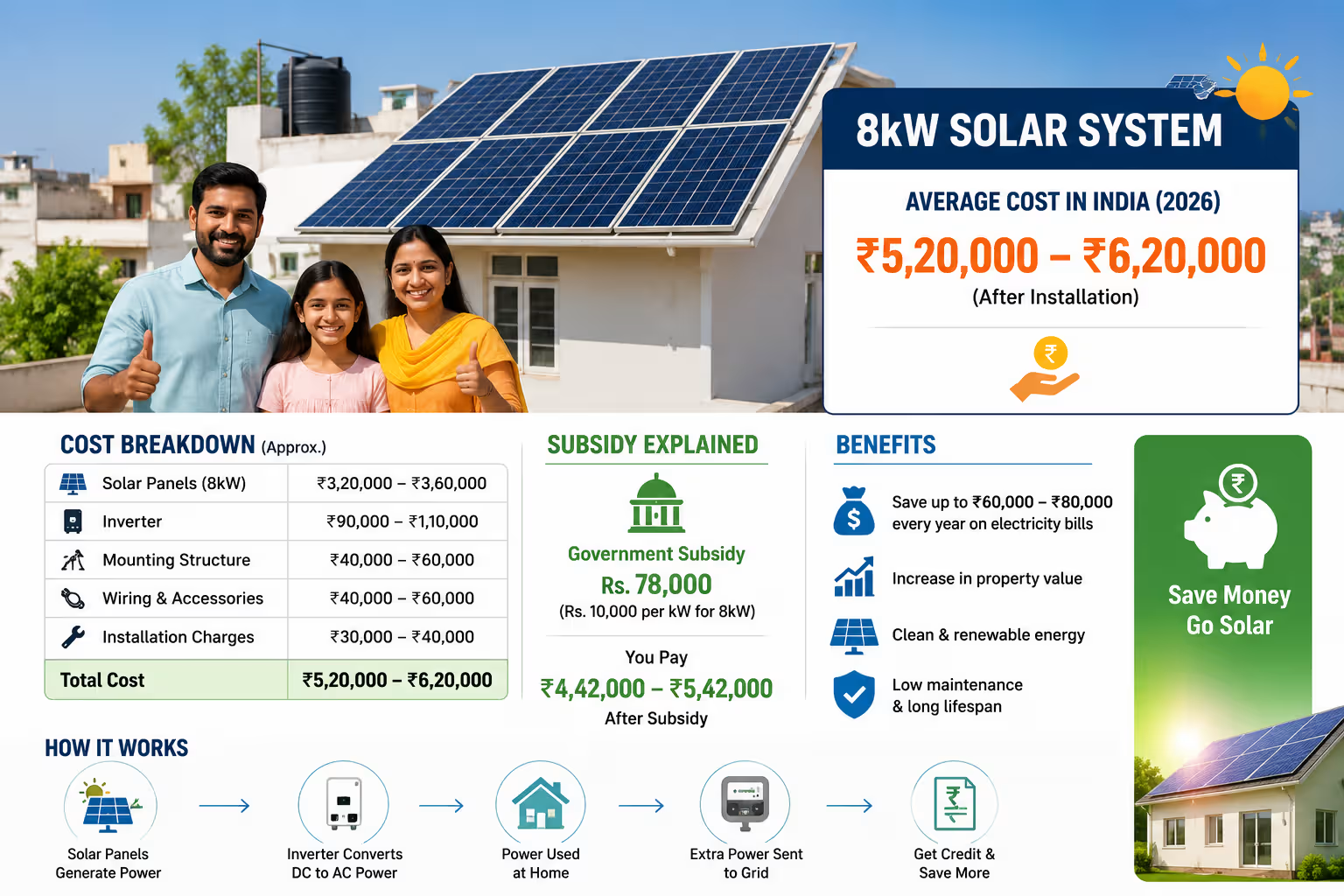
An 8kW solar system is suitable for large homes, bungalows, offices, clinics, small commercial spaces, schools, shops, and properties where electricity consumption is high. It is bigger than the common 3kW or 5kW home solar system, so it can generate more units and reduce a larger part of the monthly electricity bill.
In 2026, the 8 kw solar system price in India mainly depends on the system type, solar panel brand, inverter, roof condition, mounting structure, wiring quality, net metering charges, city, and installation quality. The price also changes depending on whether you choose an on grid, off grid, or hybrid system.
For eligible residential users, subsidy can reduce the upfront cost of an on grid 8kW system. However, the subsidy is capped, so an 8kW system does not get subsidy on the full 8kW capacity. Under PM Surya Ghar, subsidy support for above 3kW systems is shown up to ₹78,000, subject to eligibility and scheme conditions.
What Is an 8kW Solar System?
An 8kW solar system is a rooftop solar setup that can generate electricity from sunlight using solar panels and a solar inverter. The panels produce DC electricity, and the inverter converts it into AC electricity, which can be used by your home or business.
This system is useful for users whose monthly electricity usage is high. For example, if your property uses multiple ACs, refrigerators, pumps, office systems, lights, fans, washing machines, or other regular appliances, an 8kW solar system may be more suitable than a smaller system.
The important point is that 8kW does not mean the system will generate full 8kW power all the time. Solar generation changes during the day based on sunlight, season, panel direction, shadow, dust, weather, and maintenance. That is why a site inspection and electricity bill analysis are important before finalising the system size.
8kW Solar System Price in India in 2026
The 8kw solar panel price in India is not fixed because every project has different requirements. A simple rooftop with good open space may cost less, while a roof that needs a high structure, extra wiring, stronger mounting, or complicated installation may cost more.
According to references, 8kW solar price reference, on grid 8kW solar system prices after subsidy range from around ₹3.62 lakh in Lucknow to around ₹4.47 lakh in Bengaluru, while off grid and hybrid systems start from around ₹7.10 lakh and ₹7.20 lakh respectively.
| 8kW Solar System Type | Approx Price Range in India | Subsidy Eligibility | Best Suitable For |
|---|---|---|---|
| On Grid 8kW Solar System | ₹4.40 lakh to ₹5.30 lakh approx before subsidy | Eligible residential users can get central subsidy up to ₹78,000 | Large homes, bungalows, offices with stable grid supply |
| Off Grid 8kW Solar System | ₹7.10 lakh onwards approx | Usually not eligible for central rooftop subsidy | Areas with poor grid supply or high backup need |
| Hybrid 8kW Solar System | ₹7.20 lakh onwards approx | Depends on approved setup and current scheme rules | Homes and businesses needing bill savings plus battery backup |
For most urban homes and businesses, an on grid 8kW system is the most practical option when the main goal is bill saving. Off grid and hybrid systems cost more because they include batteries. Battery based systems are useful only when backup is a serious need.
8kW Solar System Price With Subsidy
The 8kw solar system price in India with subsidy is mainly relevant for residential on grid solar users. The central subsidy is available under PM Surya Ghar: Muft Bijli Yojana, but it is subject to eligibility, approved process, registered vendor, DISCOM approval, and correct documentation.
Central Subsidy for 8kW Solar System
Under PM Surya Ghar, the official scheme page shows subsidy support based on electricity consumption and suitable rooftop solar capacity. For above 3kW systems, the subsidy support is shown up to ₹78,000. This means an 8kW residential system may fall under the same subsidy cap, not eight times the 1kW subsidy.
| Rooftop Solar Capacity | Central Subsidy Benefit | Practical Meaning |
|---|---|---|
| 1kW | Up to ₹30,000 | Small homes |
| 2kW | Up to ₹60,000 | Small to medium homes |
| 3kW and above | Up to ₹78,000 | 8kW systems also fall under this subsidy cap, subject to eligibility |
The official National Portal for Rooftop Solar is the main place for rooftop solar subsidy application and DISCOM related information. Users should apply through the official PM Surya Ghar process and avoid assuming subsidy eligibility only based on installer claims.
Who Can Apply for the Subsidy?
Residential electricity consumers can generally apply if they install rooftop solar under the official scheme process. The applicant should have a valid electricity connection, suitable rooftop space, bank details, and should follow the DISCOM and portal process.
Commercial users usually do not get the same residential subsidy benefit. So if an 8kW system is being installed for an office, shop, clinic, school, or commercial property, subsidy eligibility should be checked separately before finalising the project.
8kW Solar System Price in Indore After Subsidy
For Indore users, the relevant DISCOM is M.P. Paschim Kshetra Vidyut Vitaran Company. Residential rooftop solar adoption is already active in this region. In late 2025, MPPKVVCL had distributed ₹202 crore in subsidies to around 26,000 consumers under PM Surya Ghar, with around 12,000 consumers from Indore city also benefiting from the scheme.
| Particular | Details for Indore Users |
|---|---|
| Relevant DISCOM | M.P. Paschim Kshetra Vidyut Vitaran Company |
| Suitable System Type | On grid solar for homes and businesses with stable grid supply |
| Approx Price Before Subsidy | ₹4.40 lakh to ₹5.30 lakh approx, depending on system quality |
| Approx Subsidy | Up to ₹78,000 for eligible residential consumers |
| Approx Price After Subsidy | ₹3.62 lakh to ₹4.52 lakh approx |
| Important Check | Approved panels, registered vendor, DISCOM approval, net metering |
| Practical Advice | Choose 8kW only after checking bill, sanctioned load, rooftop space, and shadow area |
For most Indore homes with stable electricity supply, an on grid 8kW system is usually more practical than an off grid system. If the main goal is to reduce the monthly bill, on grid solar gives better value. If the property needs backup during power cuts, then hybrid solar can be considered, but the cost will be much higher due to batteries.
How Many Units Does an 8kW Solar System Generate?
An 8kW solar system can generate around 32 to 40 units per day in good sunlight conditions. This means it can generate around 960 to 1,200 units per month and around 11,500 to 14,400 units per year, depending on location, weather, panel quality, tilt angle, direction, dust, shadow, and maintenance.
| Time Period | Approx Generation |
|---|---|
| Per Day | 32 to 40 units approx |
| Per Month | 960 to 1,200 units approx |
| Per Year | 11,500 to 14,400 units approx |
Real user discussions on Reddit also show why generation and actual bill reduction matter more than just system size. One user shared that a 7.2kW on grid residential solar system generated around 36 units per day and reduced high electricity bills significantly after one year of use. This is only one user experience, not a fixed guarantee, but it matches the practical generation range expected from a system close to 8kW.
Appliances an 8kW Solar System Can Support
An 8kW solar system can support much higher usage than a 3kW or 5kW system. It can help run regular appliances such as fans, lights, TV, refrigerator, washing machine, water pump, computers, office systems, and multiple ACs during daytime solar generation.
However, the actual support depends on appliance load and usage timing. Solar generation is highest during the day, so users who run ACs, office equipment, pumps, or machines during daytime can get better savings from solar.
At night, a normal on grid solar system does not generate power because there is no sunlight. The home or business uses grid electricity at night. If night backup is needed, then a hybrid or battery based setup is required, but that increases the total cost.
Types of 8kW Solar Systems and Their Cost Difference
The type of solar system has the biggest impact on the final 8kW solar system cost. An on grid system is usually the most affordable because it does not use batteries. Off grid and hybrid systems are more expensive because batteries and backup design add a major cost.
| Type of 8kW Solar System | Approx Cost Range | How It Works | Best For |
|---|---|---|---|
| On Grid 8kW Solar System | ₹4.40 lakh to ₹5.30 lakh approx | Connects with the electricity grid and uses net metering to adjust solar export and grid import | Large homes and businesses with stable grid supply |
| Off Grid 8kW Solar System | ₹7.10 lakh onwards approx | Uses batteries and works independently from the grid | Remote areas or places with poor grid supply |
| Hybrid 8kW Solar System | ₹7.20 lakh onwards approx | Connects with the grid and also uses batteries for backup | Users who need both bill savings and power backup |
If your area has stable grid supply, on grid is usually the most cost effective choice. If your property faces long power cuts or needs backup for important loads, hybrid solar may be better, but only after proper battery sizing.
Main Benefits of an 8kW Solar System
Reduces high monthly electricity bills
An 8kW system can generate enough units to reduce a large part of the monthly bill for high consumption homes and small commercial properties.
Suitable for large homes and small commercial properties
It is useful for bungalows, offices, clinics, schools, shops, and properties where electricity use is higher than a normal small home.
Generates more units than 3kW or 5kW systems
Since the system size is larger, it can produce more electricity when sunlight and installation conditions are good.
Supports high daytime electricity use
Users who run ACs, office equipment, pumps, or machines during the day can benefit more because solar generation is also highest during the day.
Helps reduce long term grid dependency
A properly installed system can reduce the amount of electricity taken from the grid during daytime usage.
Improves energy planning for homes and businesses
Solar helps users understand their power usage better and plan savings over the long term.
Gives long term savings when installed properly
Solar panels can work for many years, so the benefit is not only monthly bill reduction but long term electricity cost control.
Things That Affect 8kW Solar System Cost
Solar panel brand and technology
Advanced panels such as mono PERC, TOPCon, or bifacial modules may cost more, but they can give better output in limited rooftop space.
Inverter brand and capacity
The inverter manages solar power conversion. A good inverter improves performance, safety, and monitoring.
On grid, off grid, or hybrid system type
On grid systems are cheaper. Off grid and hybrid systems are costlier because they use batteries.
Battery capacity in off grid and hybrid systems
Bigger battery backup means higher cost. Battery type and backup hours must be planned carefully.
Roof type, height, and shadow condition
RCC roofs, tin sheds, high roofs, and shaded areas need different installation planning.
Mounting structure quality and height
A strong structure is important for wind safety, panel angle, and long term durability.
DISCOM charges, net metering, and approval process
Net metering and approval related costs can vary based on local rules and connection type.
Wiring, earthing, safety components, and installation quality
Poor wiring or weak safety components can reduce performance and create risk.
After sales service and warranty support
A solar system is a long term investment, so service support matters as much as product quality.
Why Choose Sunheaven Energy for an 8kW Solar System in Indore?
Sunheaven Energy can help Indore users decide whether an 8kW solar system is actually the right size for their property. This should be done after checking electricity bills, rooftop space, sanctioned load, shadow area, appliance usage, and future power needs.
For residential users, Sunheaven Energy can guide on subsidy eligibility, approved components, DISCOM process, net metering, and safe installation. For commercial users, the focus should be on reducing operating cost, improving daytime energy use, and designing the system based on actual load.
The right solar partner should not only quote a price. They should explain expected generation, system type, savings, subsidy limits, warranty, safety components, and maintenance clearly. This helps users make a practical decision instead of choosing only the lowest price.
Final Thoughts
An 8kW solar system is a practical choice for large homes and small commercial properties with high electricity usage. The price is higher than smaller systems, but the generation and savings can also be stronger when the system is sized and installed correctly. For Indore users, the smart approach is to check the electricity bill, rooftop space, sanctioned load, subsidy eligibility, and net metering process before finalising the system.
FAQs on 8kW Solar System Cost in India
What is the cost of an 8kW solar system in India?
An 8kW on grid solar system in India can cost around ₹4.40 lakh to ₹5.30 lakh before subsidy. Off grid and hybrid systems cost more because they include batteries and backup components.
What is the 8kW solar system price in India with subsidy?
For eligible residential users, the effective price can reduce by up to ₹78,000 under PM Surya Ghar. This means an on grid 8kW system may cost around ₹3.62 lakh to ₹4.52 lakh after subsidy, depending on city and system quality.
What is the price of an 8kW solar system in Indore?
In Indore, an 8kW on grid system may cost around ₹4.40 lakh to ₹5.30 lakh before subsidy and around ₹3.62 lakh to ₹4.52 lakh after subsidy for eligible residential users. Final cost should be confirmed after site inspection.
How much subsidy is available for an 8kW solar system?
Under PM Surya Ghar, subsidy support for above 3kW rooftop solar systems is up to ₹78,000, subject to eligibility and scheme rules.
How many units does an 8kW solar system generate per day?
An 8kW solar system can generate around 32 to 40 units per day in good sunlight conditions. Actual generation depends on weather, season, roof direction, shadow, panel quality, and maintenance.
How much rooftop space is required for an 8kW solar system?
An 8kW solar system usually needs around 650 to 800 square feet of shadow free rooftop space. The exact space depends on panel wattage, layout, walking space, and mounting structure design.
Can an 8kW solar system run multiple ACs?
Yes, an 8kW solar system can support multiple ACs during daytime, depending on AC tonnage, running hours, sunlight, and other appliances running at the same time. For night usage, grid power or battery backup is needed.
Is an 8kW solar system suitable for commercial use?
Yes, an 8kW system can be suitable for offices, clinics, shops, schools, small hotels, and small commercial properties with daytime electricity usage. Commercial subsidy rules may differ from residential subsidy, so eligibility should be checked separately.
Which is better for 8kW solar, on grid or hybrid?
On grid is better if the main goal is bill saving and the grid supply is stable. Hybrid is better if backup during power cuts is important, but it costs more because of batteries.
How many solar panels are required for an 8kW system?
It depends on panel wattage. If 540W to 550W panels are used, an 8kW system may need around 15 panels. Lower wattage panels will require more panels.