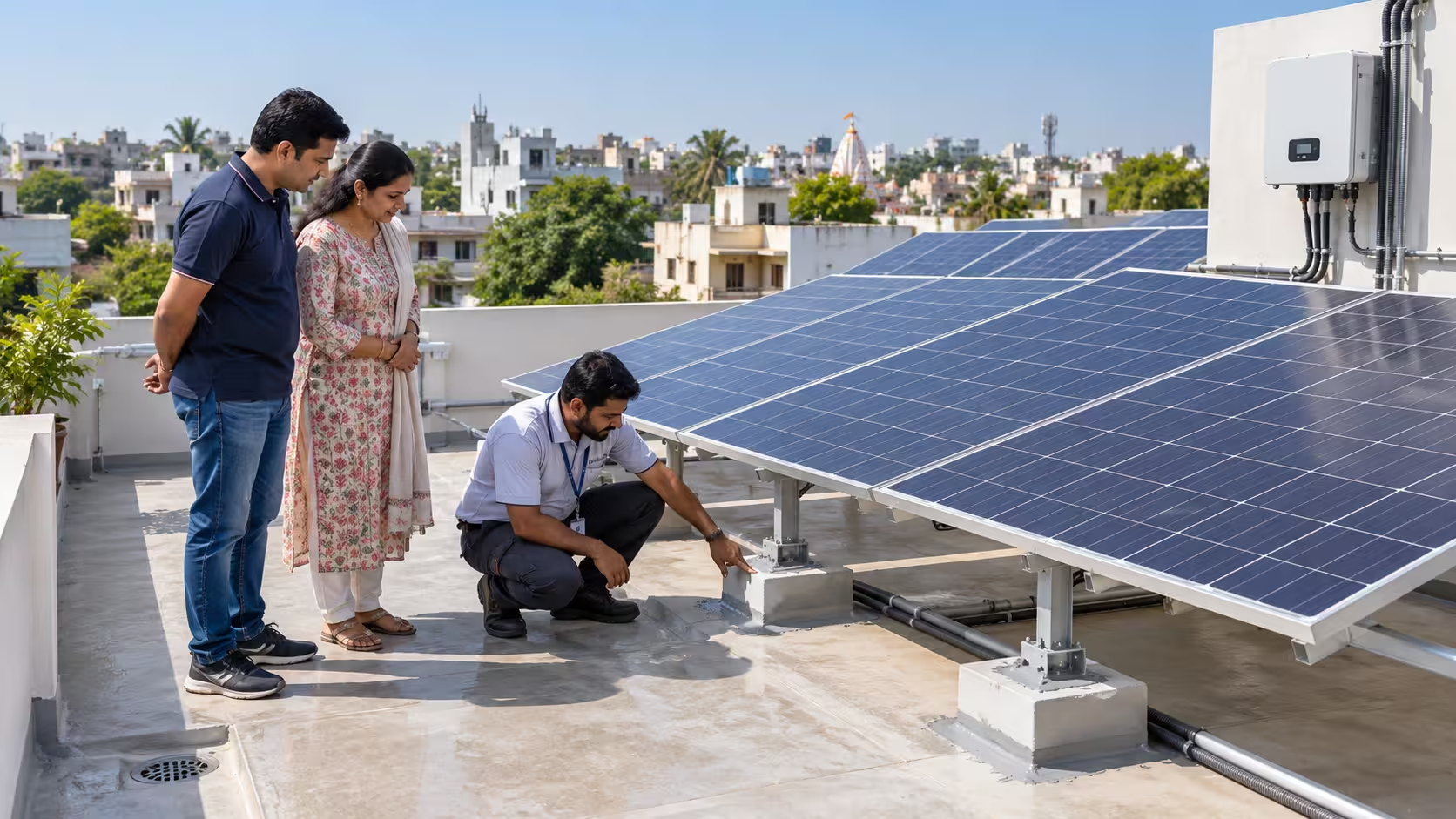
Before putting solar panels on the roof, many homeowners in Indore pause and wonder about the same thing. Will the panels crack my terrace? Will my roof start leaking in the monsoon?
These are fair questions, because your roof protects your whole home.
The simple answer is that solar panels by themselves do not damage a roof or cause leaks. They sit on a metal frame above the roof, not directly on the waterproofing.
When leaks do happen, the real reason is usually a poor installation or a roof that was already weak or cracked.
A strong, well-sealed roof stays dry even with panels on top.
This guide explains why in simple words, and shows what really causes roof problems and how they are prevented.
Where the Roof Leak Worry Comes From
The worry is understandable.
To hold panels firmly, some mounting frames are fixed to the roof, and this can mean making a few holes in the slab. People fear that these holes let rainwater in.
In reality, a skilled installer either avoids holes completely or seals each one properly.
The panel itself never touches or breaks your waterproofing layer.
So the fear is really about the quality of the installation, not the panels.
How Solar Panels Are Mounted on an RCC Roof
Most homes in Indore have a flat RCC (concrete) roof.
On this type of roof, panels are fixed in one of two safe ways.
Ballasted (Non-Penetrating) Mounts
Here the frame is held down by heavy concrete blocks, like weights.
No holes are drilled into the roof at all.
This keeps your waterproofing fully intact, which is why it is a popular and safe choice for terraces.
Anchored Mounts
Here the frame is bolted to the roof using strong fasteners, often placed on small concrete bases, sometimes called pedestals.
Each fixing point is then sealed carefully.
This method is used where winds are strong, and when sealed well, it stays completely leak-free.
Your installer picks the method that suits your roof, your area's wind, and your waterproofing condition.
What Actually Causes Roof Leaks After Solar
When a roof leaks after a solar install, it is almost always due to one of these reasons, not the panels themselves:
- Unsealed holes: Bolt holes that were not sealed properly.
- A weak roof already: Cracks or old, worn-out waterproofing that existed before the panels.
- An old roof: A terrace near the end of its life that needed repair first.
- Poor drainage: Rainwater collecting in one spot instead of flowing away.
- Covering a bad area: Placing panels over a spot that was already damaged, making it harder to reach later.
- Unskilled work: A cheap or careless ("jugaad") installation that skips proper sealing.
Every one of these comes down to roof condition and installation quality, both of which can be checked and fixed before work begins.
Can Solar Panels Damage the Roof Structurally?
For a normal, strong RCC roof, the weight of solar panels is small and not a problem.
A well-built terrace can easily carry them for 25 years or more.
One important point: waterproofing and structural strength are two different things.
A roof can be strong but still leak, or dry but weak.
That is why a good installer checks both before starting, not just one.
Can Solar Panels Actually Protect Your Roof?
Yes, in some ways panels can help your roof.
The area under the panels stays shaded, so it faces less direct sunlight, heat, and rain.
Over time, this can reduce heat cracks and slow the wear on that part of the terrace.
So instead of harming the roof, a good solar setup can give the covered area a little extra protection.
How to Prevent Roof Damage and Leakage
Most roof problems are easy to avoid with the right steps.
The table below shows the common risks and how a proper installation prevents each one:
| Risk Factor | How a Good Installation Prevents It |
|---|---|
| Weak or old waterproofing | Check and repair the terrace before installing panels |
| Water leaking through fixings | Use ballasted mounts, or seal every bolt hole properly |
| Wrong mount for the roof | Match the mounting method to your roof type and wind |
| Water collecting on the roof | Keep proper slope and clear drainage under the panels |
| Careless installation | Choose a skilled, experienced installer, not a cheap fix |
| Hiding a damaged spot | Never place panels over an already-leaking area |
Get Sun Heaven Energy's Help With a Safe, Leak-Free Installation
The safest way to protect your roof is a careful survey before any work starts.
This checks whether your terrace is strong, whether the waterproofing is in good condition, and which mounting method is right for your home.
This is where Sun Heaven Energy can help homeowners in Indore:
- Roof and waterproofing check to spot any weak or damaged areas first.
- Right mounting method chosen for your roof type and local wind.
- Proper sealing of every fixing point to keep your terrace dry.
- Full support through the solar panel installation process and long-term care for your residential solar system.
Our aim is to help you go solar without any worry about your roof, and to tell you honestly if something needs fixing first.
Frequently Asked Questions
Do solar panels leak on a flat RCC roof?
Not if installed well. Ballasted mounts need no drilling, and anchored mounts are sealed at every point, so a good install keeps your roof dry.
Does drilling for solar damage the terrace waterproofing?
Only if the holes are left unsealed. A skilled installer seals each fixing, so the waterproofing stays intact. Ballasted mounts avoid drilling completely.
Should I waterproof my terrace before installing solar?
If your waterproofing is old, cracked, or weak, yes.
It is much easier to repair the roof first than to remove panels later.
Are solar panels too heavy for my roof?
For a normal, strong RCC roof, no. The panel weight is small and well within what a sound terrace can carry.
What if my roof already leaks?
Fix the leak first, then install solar. Placing panels over a damaged area only makes it harder to repair later.