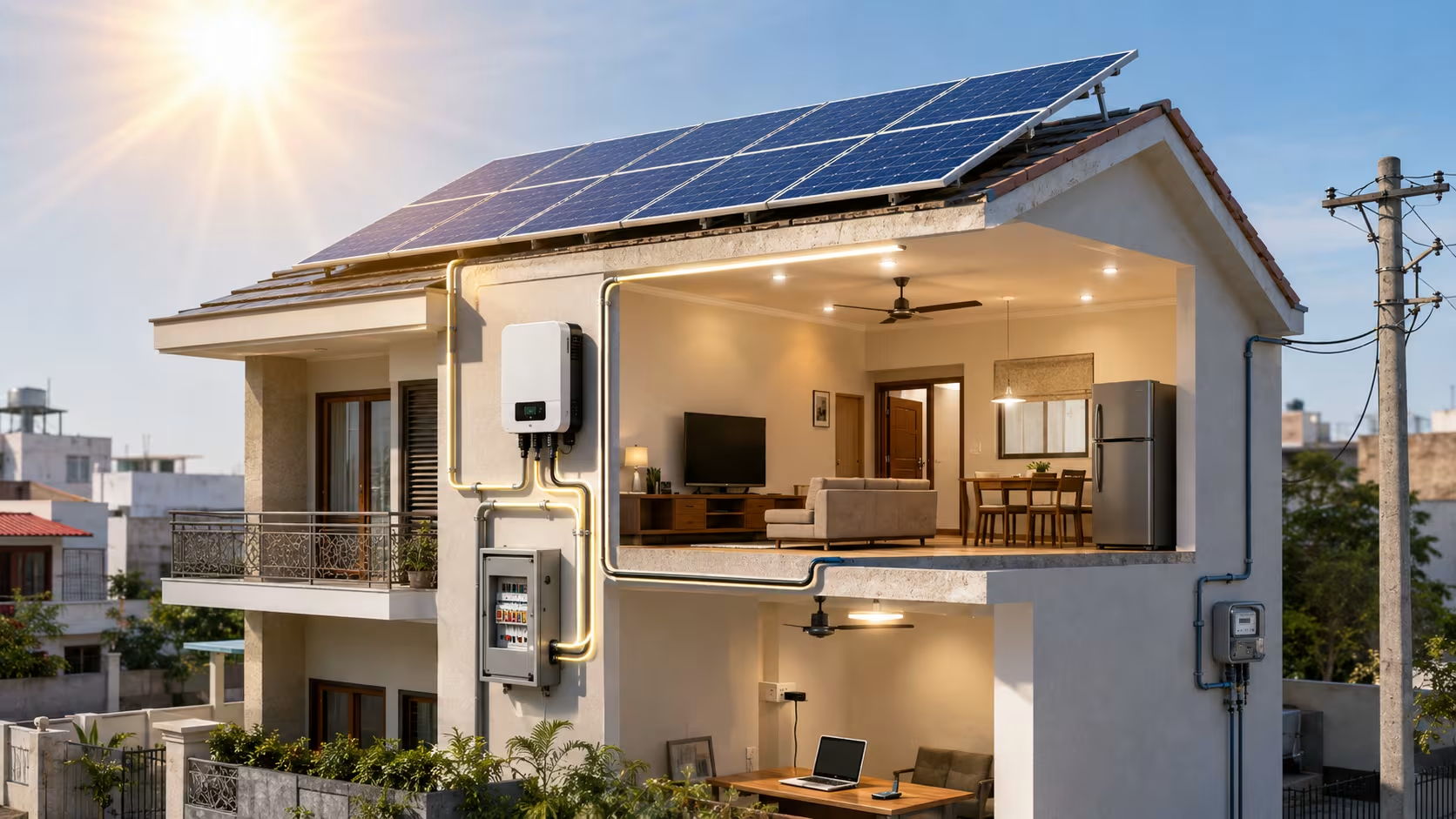
Solar panels work through the photovoltaic effect, where silicon solar cells convert sunlight into electricity. When sunlight hits a solar panel, tiny energy particles from the sun, called photons, interact with the silicon cells inside the panel. This energy excites electrons inside the cells and makes them move. That movement creates direct current electricity, also called DC power.
However, the electricity produced by solar panels cannot directly run most home appliances. Homes use alternating current electricity, also called AC power. This is where the solar inverter comes in. The inverter converts DC power into AC power and sends it to your home's switchboard. From there, the electricity runs your lights, fans, fridge, TV, washing machine, air conditioner, and other appliances.
In simple words, solar panels produce the power, the inverter makes it usable, and your home uses it just like normal electricity.
What Is Solar Energy?
Solar energy is the light and heat we get from the sun. It is one of the cleanest and most natural sources of energy available to us.
Unlike coal, diesel, or gas, solar energy does not need to be burnt to create power. It is available every day and can be used directly through the right technology.
Sunlight travels in tiny packets of energy called photons. You cannot see these photons separately, but they are present in sunlight all day. When these photons fall on a solar panel, the panel captures their energy and converts it into electricity.
This is why solar panels are placed on rooftops or open spaces where they can receive maximum sunlight during the day.
For Indian homes, solar energy is especially useful because most parts of India receive good sunlight for a large part of the year. This makes rooftop solar a practical option for reducing electricity bills and depending less on grid power.
The uses of solar energy in daily life now go beyond just lighting and include running appliances, heating water, charging EVs, and powering home security systems.
How Do Solar Panels Generate Electricity?
The science behind solar panels is called the photovoltaic effect.
The word may sound technical, but the process is easy to understand.
- "Photo" means light.
- "Voltaic" means electricity.
So photovoltaic simply means making electricity from light.
A solar panel is made of many small units called solar cells. These cells are usually made from silicon, a material that reacts well with sunlight.
When sunlight falls on these silicon cells, it gives energy to the electrons inside them. Once these electrons become active, they start moving. This movement of electrons creates electricity.
What Happens Inside a Solar Cell?
1. The Solar Cell Has Two Silicon Layers
A solar cell works like a thin sandwich with two layers of silicon.
These layers are treated differently so that an electric field is created between them. You can think of this electric field as an invisible force that pushes electrons in one direction.
This electric field is important because electricity needs movement. Without this push, the electrons would move randomly and no useful electricity would be produced.
2. Sunlight Hits the Solar Cell
When sunlight falls on the panel, photons hit the silicon cells. These photons carry energy from the sun.
When they enter the cell, they transfer their energy to the electrons inside the silicon.
This energy knocks the electrons loose from their normal position. Once the electrons are free, they are ready to move.
3. Electrons Start Moving
The electric field inside the solar cell pushes the loose electrons in one direction.
This organised movement of electrons is what we call electric current.
This is the main point where sunlight becomes electricity. The panel is not storing sunlight or heat. It is converting light energy into electrical energy.
4. Electricity Flows Out Through Wires
Thin metal lines on the solar cell collect this moving electricity.
From there, the electricity travels through wires and comes out of the panel as DC power.
One solar cell produces only a small amount of power. That is why many cells are connected together to make one solar panel.
A normal solar panel usually has 60 to 72 cells. When many panels are connected on a rooftop, they can generate enough electricity to power an entire home.
In one line: sunlight knocks electrons loose, the electrons move in one direction, and that movement becomes electricity.
Did you know? The photovoltaic effect was first discovered in 1839, and the first practical silicon solar cell was built in 1954. The same basic science is still used in modern rooftop solar panels today.
What Are Solar Panels Made Of?
A solar panel may look like one simple glass sheet from the outside, but it is made of many layers and parts.
Each part has a clear role in protecting the panel, capturing sunlight, and carrying electricity safely.
Solar Cells
These are the silicon cells that actually convert sunlight into electricity.
They are usually arranged in rows and connected together so that the power produced by each cell can combine and flow out of the panel.
The quality of the solar cells plays a major role in how much electricity the panel can produce.
Glass Cover
The top layer of a solar panel is a strong glass sheet.
It allows sunlight to pass through while protecting the solar cells from dust, rain, wind, and small particles.
Anti-Reflective Coating
Some sunlight can bounce away from the surface of the glass.
To reduce this loss, panels use an anti-reflective coating.
This thin layer helps the panel absorb more sunlight instead of reflecting it away.
Back Sheet
The back sheet is the protective layer at the bottom of the panel.
It helps protect the solar cells from moisture, heat, and electrical damage.
A good back sheet also improves the panel's durability and safety.
Wires and Connectors
The electricity produced by the solar cells needs a path to flow out.
Thin wires inside the panel collect the electricity and move it toward the output cable.
Metal Frame
Most solar panels have an aluminium frame around them.
This frame gives strength to the panel and helps fix it properly on the mounting structure.
The frame also protects the edges of the panel and keeps everything stable on the roof.
Different panel materials and cell technologies can affect output, space requirement, and cost, so understanding the types of solar panels in India is useful before choosing panels for your home.
How Solar Panels Power Your Home Step by Step
Making electricity is only the first step.
For solar power to run your home, the electricity has to move through a complete system.
This system includes:
- Solar panels
- Inverter
- Wiring
- Switchboard
- Net meter
- Battery (optional)
1. Solar Panels Make DC Power
When sunlight falls on the panels, the solar cells produce DC electricity.
DC stands for direct current, where electricity flows in one direction.
Solar panels naturally produce DC power because of the way electrons move inside the cells.
2. The Inverter Converts DC Into AC Power
Your home appliances need AC power.
AC stands for alternating current.
This is the type of electricity supplied by the electricity board and used by normal household appliances.
The solar inverter converts the DC power from your panels into AC power.
This makes the electricity safe and usable for your home.
3. Power Reaches Your Home Switchboard
After conversion, AC power goes to your home's main switchboard.
From there, it is distributed throughout the house.
Your lights, fans, refrigerator, television, washing machine, and other appliances can then use this solar electricity.
During the day, your home first uses the electricity produced by your solar panels.
4. Extra Power Goes to the Grid or Battery
Sometimes your solar panels produce more electricity than your home is using.
This often happens during sunny afternoons.
In Grid Connected Systems
The extra power is sent to the electricity grid through solar net metering.
The electricity board gives you credit for the extra units sent to the grid.
Later, when your panels are not producing power, such as at night, your home can use grid electricity and those credits can reduce your bill.
A smart meter reader helps record the electricity imported from the grid and exported back to the grid, making solar billing more accurate.
In Battery Systems
The extra power can be stored in batteries.
This stored electricity can then be used:
- At night
- During power cuts
- During emergencies
For homes that need both grid savings and backup power, a hybrid solar system in India can be more suitable than a basic on-grid setup.
Sunheaven helps you choose the right system size, installs quality panels and inverter systems, and supports the net metering process with the electricity board.
Did you know? With net metering, the extra units your solar panels send to the grid during the day are adjusted against the units you use from the grid later. This can bring your electricity bill much lower and in some cases close to zero depending on your system size and usage.
Other Forms of Solar Technology
Most people think of rooftop panels when they hear the word solar.
However, solar energy can be used in several ways.
Solar PV Panels
These are the rooftop solar panels used to generate electricity.
They are the most common choice for:
- Homes
- Offices
- Shops
- Factories
- Institutions
Solar Water Heaters
Solar water heaters do not produce electricity.
Instead, they use sunlight to heat water.
These systems are commonly used in:
- Homes
- Hotels
- Hospitals
- Hostels
Concentrated Solar Power (CSP)
Concentrated Solar Power uses large mirrors to focus sunlight onto one point.
The heat generated is then used to produce electricity.
CSP is mostly used in large power plants and is not typically suitable for residential use.
Why Sunheaven Is the Best Solar Provider for Your Home
Choosing solar is not only about installing panels.
You need:
- The right system size
- Quality panels
- A reliable inverter
- Safe installation
- Net metering support
Sunheaven helps homeowners with all of this in one place.
Sunheaven checks your:
- Electricity bill
- Roof space
- Sunlight availability
- Power usage
before recommending a suitable solar setup.
The right system size also depends on annual electricity consumption.
Small homes can compare the 3 kW solar system price in India, while medium homes can look at the 4 kW solar panel price in India or 5 kW solar system price in India before finalising capacity.
Why Homeowners Choose Sunheaven
- Right solar system planning
- Good-quality panels and inverter
- Safe rooftop installation
- Net metering support
- Simple guidance and after-installation support
With Sunheaven, the technical work is handled by experts so you can enjoy cleaner energy and lower electricity bills without confusion.
The solar panel subsidy in India can also reduce the upfront cost of rooftop solar, and the complete solar panel installation process in Indore covers everything from site survey and system design to approvals, installation, net metering, and commissioning.
Frequently Asked Questions
Q1. Do solar panels work on cloudy days and in the rainy season?
Yes, solar panels work on cloudy and rainy days, but they generate less electricity than on sunny days. Rain can also help clean dust from the panels.
Q2. Do solar panels work at night?
No. Solar panels do not generate electricity at night because sunlight is not available. At night, homes use grid electricity or battery power if available.
Q3. Do solar panels need direct sunlight to work?
Direct sunlight gives the highest output, but solar panels can also generate electricity during cloudy or diffused daylight conditions.
Q4. How long do solar panels last?
Good-quality solar panels usually last 25 years or more. Most panels continue operating at around 80% to 85% capacity even after 25 years.
Q5. How efficient are solar panels?
Most modern rooftop solar panels convert around 20% to 23% of sunlight into electricity. Efficiency depends on panel quality, sunlight, temperature, dust, and installation angle.
Q6. What is the difference between AC and DC power in solar?
Solar panels produce DC power. The inverter converts this DC power into AC power, which is used by household appliances.
Q7. Can solar panels reduce my electricity bill to zero?
Yes, if your solar system generates enough electricity to match your monthly consumption. However, fixed electricity board charges may still apply.
Q8. Do solar panels need maintenance?
Solar panels require very little maintenance. Regular cleaning and occasional inspection of wiring, inverter, and mounting structures are usually sufficient.
Q9. What happens if there is a power cut?
A standard grid-connected solar system usually shuts down during a power cut for safety reasons. Homes needing backup power should install a battery-based or hybrid solar system.
Q10. How do I know what solar system size my home needs?
The ideal system size depends on your electricity bill, roof space, and power usage. Sunheaven can assess these factors and recommend the right solar setup for your home.