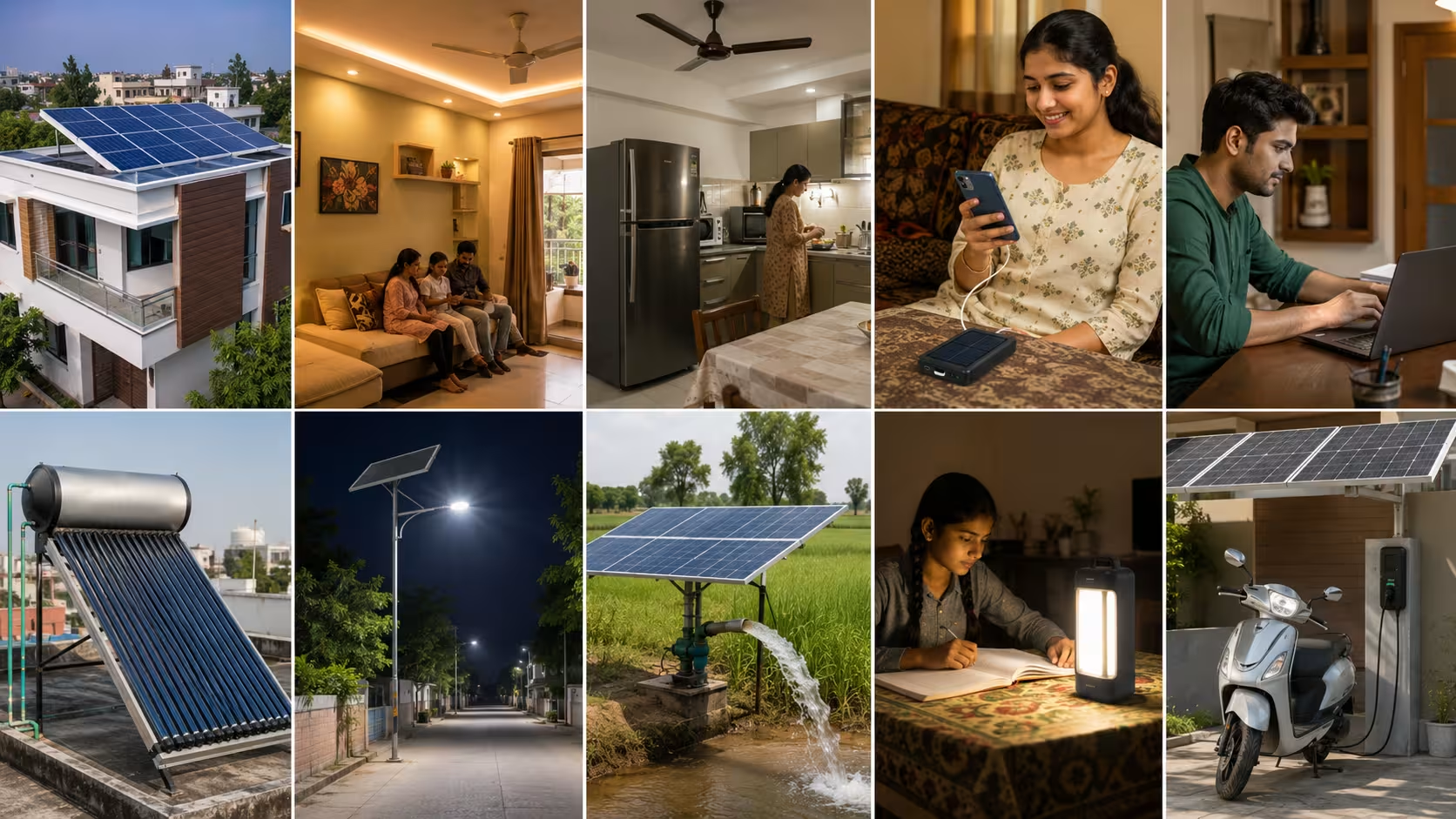
The sun gives us free energy every single day, yet most homes still pay a big electricity bill every month. That is slowly changing. India is now the world's third-largest producer of solar power, and our total solar capacity has crossed 154 GW in 2026.
Solar is no longer just about huge power plants in the desert. It already powers far more of our daily life than most people notice, from the lights in a garden to the water in a geyser to the phone in your hand.
In this guide, we walk you through the top 10 uses of solar energy in daily life. Each one is simple, useful, and can save you money.
What Is Solar Energy?
Solar energy is the light and heat we get from the sun.
We can turn it into two useful things:
- Solar panels (PV panels) turn sunlight into electricity.
- Solar thermal collectors turn sunlight into heat, such as for hot water.
Both are clean, free to run once installed, and never run out.
That is the base idea behind every use you will read below.
10 Best Uses of Solar Energy in Daily Life
Here are the 10 most useful ways solar energy fits into an everyday Indian home.
1. Generating Electricity and Cutting Your Bills
This is the most common and most powerful use of solar.
A rooftop solar system makes electricity from sunlight and runs your whole home, including:
- Fans
- Lights
- Refrigerator
- Television
- Air conditioners
- Other household appliances
With the extra power sent back to the grid through net metering, many homes cut their electricity bill by up to 90%.
A smart meter reader helps track how much power your home imports from the grid and how much extra solar power it exports back, which is important for accurate net metering.
Did you know? Electricity tariffs in India rise by about 3% to 6% every year, while a good solar panel loses only about 1% of its power annually. Solar protects you from rising bills for the next 25 years.
2. Solar Water Heating
A geyser is one of the most power-hungry appliances in any home.
A solar water heater uses sunlight to heat water for your bath and kitchen, reducing electricity consumption significantly.
Types of Solar Water Heaters
Active Solar Water Heaters
Use a small pump to move water or fluid through the panels.
Passive Solar Water Heaters
Use natural circulation where hot water rises and cold water sinks, requiring no pump.
3. Solar Cooking
A solar cooker lets you cook food using only sunlight, with zero gas or electricity cost.
It is clean, safe, and free to operate.
Types of Solar Cookers
Box Cooker
An insulated box with a glass lid that traps heat. Ideal for slow cooking foods such as rice and dal.
Panel Cooker
Uses reflective folding panels to focus sunlight onto a cooking pot.
Parabolic Cooker
Uses a curved reflective dish to generate high temperatures and cook food quickly, similar to a gas stove.
4. Indoor and Outdoor Solar Lighting
Solar lights charge during the day and automatically switch on at night.
Benefits include:
- No wiring required
- No electricity bill
- Easy installation
- Low maintenance
Common examples include:
- Garden lights
- Pathway lights
- Street lights
- Indoor solar lamps
- Balcony lights
- Fence lights
- Pool lights
A rooftop solar system can also power your home's complete lighting setup.
5. Solar-Powered Gadgets and Chargers
Many small everyday gadgets now run on solar power.
Popular examples include:
- Solar phone chargers
- Solar power banks
- Solar torches
- Solar lanterns
- Solar calculators
- Solar watches
- Solar Bluetooth speakers
- Solar backpacks
These are especially useful while travelling, camping, or trekking.
6. Solar Water Pumps for Homes and Farms
Solar water pumps use solar panels to run water pump motors directly.
They help:
- Pump water from wells
- Draw water from borewells
- Lift water from rivers
- Fill overhead water tanks
- Irrigate agricultural land
Major benefits include:
- No diesel expenses
- Lower electricity bills
- Reduced pollution
- Reliable daytime operation
Did you know? Under the PM-KUSUM scheme, lakhs of solar pumps have already been installed across India.
7. Charging Electric Vehicles (EVs)
Electric vehicles are growing rapidly in India.
One of the cheapest ways to charge an EV is by using electricity generated from rooftop solar.
Solar-powered EV charging offers:
- Lower charging costs
- Reduced dependence on grid electricity
- Cleaner transportation
- Long-term savings
Homes running EV chargers along with ACs and other appliances may require a larger rooftop solar system.
8. Solar Heating and Cooling
Solar energy can help both heat and cool a home.
Solar Heating Applications
- Room heating
- Water heating
- Swimming pool heating
Solar Cooling Applications
Solar Attic Fans
Remove hot air from attic spaces and reduce air conditioner workload.
Solar Coolers
Run using solar electricity and help reduce indoor temperatures.
Solar Pool Heating Systems
Maintain comfortable pool temperatures using sunlight.
9. Backup Power with Solar Batteries
Adding batteries to a solar system allows homeowners to store excess daytime electricity.
Stored power can be used:
- At night
- During power cuts
- During grid failures
Battery backup can keep essential appliances running, including:
- Lights
- Fans
- Refrigerator
- Wi-Fi router
- Phone chargers
Homes seeking both electricity savings and backup power often choose a hybrid solar system.
10. Solar-Powered Home Security Cameras
Solar-powered CCTV cameras are becoming increasingly popular.
These systems include a small solar panel that charges an internal battery throughout the day.
Benefits include:
- No external power connection required
- Easy installation
- Continuous charging
- Wi-Fi connectivity
- Recording during power outages
They are ideal for:
- Gates
- Boundary walls
- Farmhouses
- Outdoor security monitoring
How to Actually Bring Solar Into Your Home
You can begin with individual products like a solar lamp or solar charger.
However, the most effective way to unlock many of these benefits at once is through a rooftop solar system.
How Sunheaven Simplifies Solar Adoption
Right-Sized System Design
Sunheaven analyses your previous electricity consumption and recommends an appropriately sized system.
This ensures you:
- Avoid overspending
- Generate sufficient electricity
- Maximise savings
High-Efficiency Approved Panels
Sunheaven uses:
- ALMM-listed solar panels
- Government-approved modules
- High-efficiency technologies
These help secure subsidy eligibility while generating more electricity in less roof space.
End-to-End Support
Sunheaven manages:
- System design
- Installation
- Net metering
- Solar subsidy paperwork
- After-sales support
For homeowners planning rooftop solar locally, the solar panel installation process in Indore includes site survey, system design, approvals, installation, net metering, and final commissioning.
Recommended Solar System Size by Annual Electricity Consumption
| Solar System Size | Units Generated Per Year | Suitable For |
|---|---|---|
| 1 kW | 1,400 to 1,450 units | Very small homes and backup loads |
| 2 kW | 2,800 to 2,950 units | Small 1 BHK homes |
| 3 kW | 4,200 to 4,350 units | Small 2 BHK homes |
| 4 kW | 5,600 to 5,800 units | 2 to 3 BHK homes |
| 5 kW | 7,000 to 7,250 units | 3 to 4 BHK homes |
| 10 kW | 14,000 to 14,500 units | Large homes and small offices |
Small 1 BHK homes can compare the 2 kW solar system price in India, while 2 BHK homes can look at the 3 kW solar system price in India.
For 2 to 3 BHK homes, the 4 kW solar panel price in India is usually more relevant, and larger 3 to 4 BHK homes can compare it with the 5 kW solar system price in India.
Conclusion
Solar energy is no longer limited to large power plants. It already fits into everyday life through electricity generation, water heating, cooking, lighting, EV charging, water pumping, cooling, backup power, and security systems.
Each application helps reduce energy costs, lower pollution, and reduce dependence on traditional electricity sources.
The biggest advantage is that a single rooftop solar system can support many of these applications simultaneously while delivering clean electricity for more than 25 years.
Ready to put the sun to work for your home? Book a free solar consultation with Sunheaven and start your journey towards lower electricity bills and long-term energy independence.
Frequently Asked Questions (FAQs)
Q1. What are the main uses of solar energy in daily life?
The main uses include generating electricity, heating water, cooking food, lighting homes, powering water pumps, charging gadgets and electric vehicles, providing backup power, and running security systems.
Q2. How is solar energy used in homes?
Homes use solar energy primarily through rooftop solar systems that power lights, fans, refrigerators, televisions, washing machines, air conditioners, and other appliances. Solar water heaters and solar lighting are also common.
Q3. Can solar energy be used for cooking?
Yes. Solar cookers use sunlight to cook food without gas or electricity. Box cookers, panel cookers, and parabolic cookers are the most common types.
Q4. How is solar energy used in farming and agriculture?
Solar energy powers irrigation pumps, crop dryers, and cold storage systems. It helps reduce diesel consumption and lowers operating costs for farmers.
Q5. What are some examples of solar-powered gadgets used in everyday life?
Examples include solar phone chargers, solar power banks, solar lanterns, solar torches, solar calculators, solar watches, solar Bluetooth speakers, and solar backpacks.
Q6. List any three uses of solar energy.
Three common uses are:
- Generating electricity for homes
- Heating water using solar water heaters
- Running water pumps for homes and farms