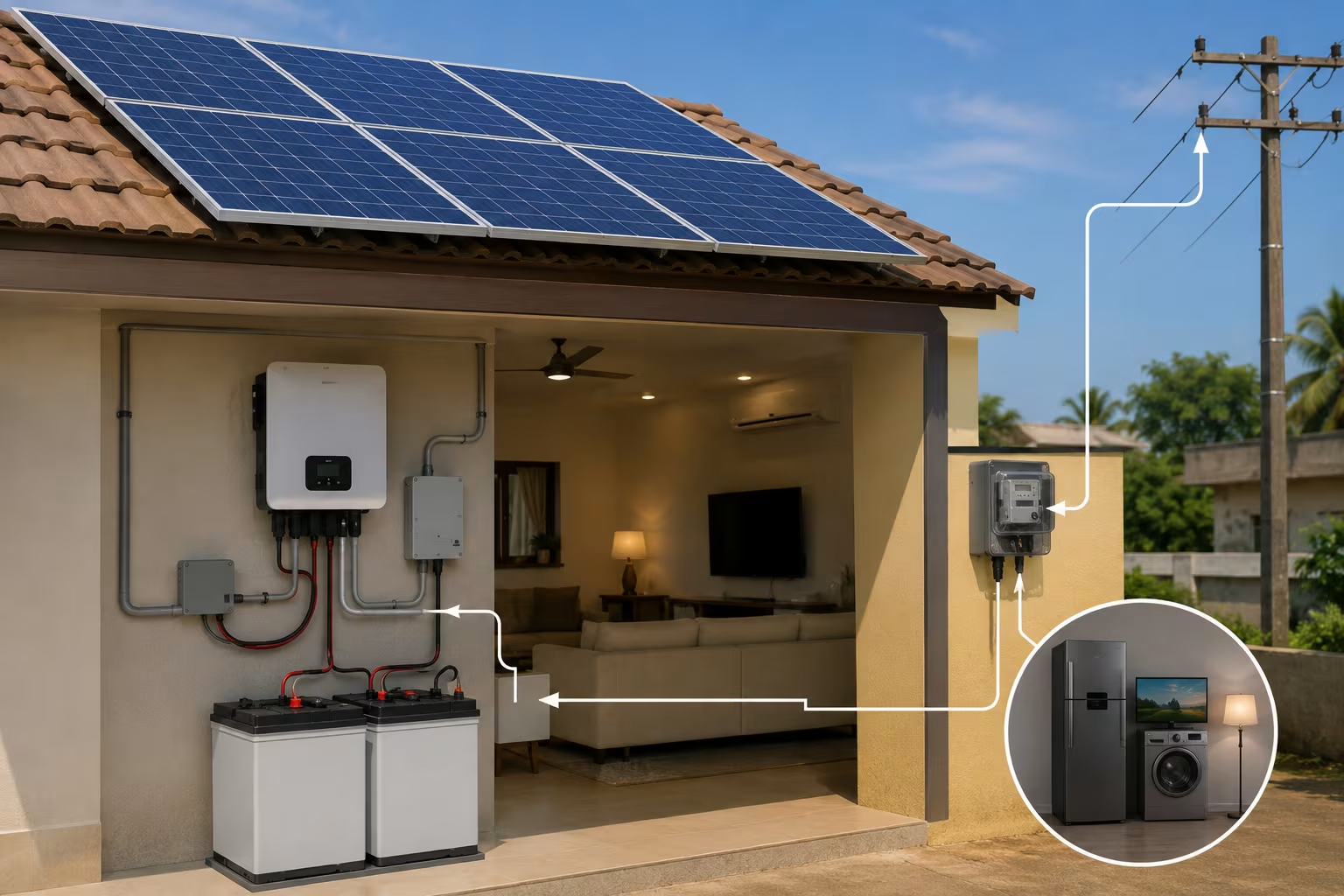
A hybrid solar system is useful for people who want two things from solar, lower electricity bills and backup during power cuts. A normal on grid solar system helps reduce bills, but it usually shuts down during a power cut for safety reasons. A hybrid system solves this by adding battery storage along with solar panels and grid connection.
In simple words, if you are asking what is hybrid solar system, the answer is this: it is a solar setup that uses solar panels, a hybrid inverter, batteries and the electricity grid together. During the day, it can run your home on solar power. Extra power can charge the battery. When there is no sunlight or when the grid goes off, the battery can support selected appliances.
For Indian homes, a hybrid solar system is more useful in areas where power cuts are common or where backup is important for work from home, medical equipment, shops, offices, security systems, WiFi, fans, lights and basic appliances. It is not the cheapest solar option, but it gives better energy control than a simple on grid system.
What Is a Hybrid Solar System?
A hybrid solar system is a rooftop solar power system that combines solar panels, batteries and the electricity grid. It works like a middle option between an on grid solar system and an off grid solar system. An on grid system mainly focuses on bill saving, while an off grid system mainly depends on battery backup. A hybrid system tries to offer both.
In a hybrid grid solar system, your home can use solar power first, then battery power when needed, and grid power when solar and battery are not enough. This makes it more flexible than a normal on grid setup. It is especially helpful when your area has power cuts, voltage issues or high evening electricity use.
But users should understand one practical point. A hybrid system is costlier because batteries and hybrid inverters are expensive. Battery capacity also decides how much backup you actually get. If the battery is small, it may run only basic loads like lights, fans, WiFi and TV. If you want AC or heavy appliances on backup, the system needs careful design and a bigger battery.
How Does a Hybrid Solar System Work?
A hybrid solar system works by managing solar power, battery storage and grid electricity together. Here is the simple flow:
-
Solar panels generate power during the day
The solar panels installed on your rooftop collect sunlight and produce DC electricity. -
The hybrid inverter converts the power
The hybrid inverter converts DC electricity into AC electricity, which your home appliances can use. -
Your home uses solar power first
During the day, the system gives first priority to solar power for running lights, fans, fridge, TV, AC and other appliances. -
Extra solar power charges the battery
If your solar panels produce more electricity than your home is using, the extra power is stored in the battery. -
Surplus power may go to the grid
If the battery is full and the system is approved for export, extra electricity may go to the grid through net metering or a bidirectional meter, depending on local DISCOM rules. -
Battery power is used during power cuts or low sunlight
At night, during cloudy weather, or during power cuts, the battery can run selected appliances based on its capacity and available charge.
Main Components of a Hybrid Solar System
A hybrid system is not just solar panels with a battery. It is a complete system where every component has a role. The quality of these components directly affects safety, backup time and long term performance.
- Solar panels
- Hybrid solar inverter
- Battery bank
- Mounting structure
- Net meter or bidirectional meter
- ACDB and DCDB protection boxes
- Earthing and lightning protection
- Solar cables and connectors
The hybrid inverter is the most important component because it manages solar power, battery charging, grid supply and load output. Battery selection is also important because battery type, capacity and life affect both cost and user experience. Reddit discussions around solar batteries also show that users often ask whether they should add batteries later or choose a hybrid inverter from the start, because battery compatibility depends on inverter type and system design.
Types of Hybrid Solar Panels
Hybrid solar systems can use different types of solar panels. The word “hybrid” mainly refers to the system design, not the panel itself. Still, panel type matters because it affects generation, roof space usage and final cost.
Monocrystalline Solar Panels
Monocrystalline solar panels are commonly used in modern rooftop solar systems because they offer good efficiency and need less space compared to older panel types. They are suitable for homes where rooftop area is limited but the user wants better power generation.
For a hybrid solar system, monocrystalline panels can be a practical choice because better daytime generation can help run home loads and charge the battery more effectively. They may cost slightly more than older technologies, but they are widely preferred for residential and commercial rooftops.
Bifacial Solar Panels
Bifacial solar panels can generate electricity from both the front and rear side of the panel when the installation condition supports reflected sunlight. These panels can be useful on elevated structures, white surfaces or open rooftops where reflected light can reach the back side.
For normal residential roofs, bifacial panels should be selected only after checking the installation design. They are not automatically better for every home. If the roof structure and reflection are not suitable, the extra benefit may be limited.
TOPCon Solar Panels
TOPCon panels are a newer solar technology known for higher efficiency and better performance compared to many older panel types. They are useful where users want better output from limited rooftop space.
In a hybrid solar system, TOPCon panels can be helpful because higher generation can support both home usage and battery charging. However, the cost may be higher, so the choice should depend on budget, roof area and actual electricity usage.
Hybrid Solar System Price in India in 2026
The cost of a hybrid solar system in India is higher than a normal on grid system because it includes batteries and a hybrid inverter. SolarSquare’s hybrid solar reference states that hybrid solar system prices in India start around ₹3 lakh for a 2kW hybrid system and can go up to around ₹15 lakh for a 10kW system. It also notes that batteries may need replacement after around 5 to 10 years depending on battery chemistry and usage.
| Hybrid Solar System Size | Approx Price Range in India | Best Suitable For |
|---|---|---|
| 2kW Hybrid Solar System | ₹3 lakh onwards approx | Small homes with basic backup needs |
| 3kW Hybrid Solar System | ₹4.5 lakh onwards approx | Medium homes needing bill saving and backup |
| 5kW Hybrid Solar System | ₹7.5 lakh onwards approx | Larger homes or small offices |
| 10kW Hybrid Solar System | ₹15 lakh onwards approx | Commercial spaces or larger properties |
These are approximate prices. The final cost depends on solar panel brand, hybrid inverter brand, battery type, battery capacity, backup requirement, roof condition, wiring quality, mounting structure and installation quality. For example, a system designed only for lights, fans and WiFi will cost less than a system designed to support AC, pump or heavy appliances during power cuts.
This is why a site inspection is important. A hybrid system should not be sold only by kilowatt size. It should be designed based on how much backup the user actually wants, which appliances need backup and for how many hours.
Hybrid Solar System Subsidy in India
The main residential rooftop solar subsidy in India is under PM Surya Ghar: Muft Bijli Yojana. The scheme is meant for residential households and supports rooftop solar installation through the national portal. As per PIB, households can apply through the National Portal and select a suitable vendor there. The scheme gives ₹30,000 for 1kW, ₹60,000 for 2kW and ₹78,000 for 3kW or higher systems at current benchmark prices.
Is Subsidy Available on Hybrid Solar Systems?
This needs careful explanation. The subsidy is mainly linked to eligible residential rooftop solar systems under the scheme rules. For a hybrid solar system, subsidy eligibility may depend on whether the system design, inverter, net metering, equipment and vendor process follow the current PM Surya Ghar and DISCOM requirements.
In simple words, do not assume that every battery based hybrid system will automatically get subsidy. Before buying, the user should confirm the current hybrid solar system subsidy eligibility from the official PM Surya Ghar portal, the registered vendor and the local DISCOM.
What Conditions Can Affect Subsidy Eligibility?
| Point | What Users Should Know |
|---|---|
| Main Scheme | PM Surya Ghar: Muft Bijli Yojana |
| Eligible Users | Mainly residential electricity consumers |
| Subsidy Limit | Up to ₹78,000 for 3kW and above, subject to eligibility |
| Application Mode | Through the official National Portal |
| Key Requirement | Approved system, registered vendor, correct application and DISCOM approval |
| Important Caution | Battery or hybrid setup eligibility should be confirmed before installation |
| Practical Advice for Indore | Check with M.P. Paschim Kshetra Vidyut Vitaran Company process and official portal before finalising |
For Indore users, the relevant DISCOM is M.P. Paschim Kshetra Vidyut Vitaran Company. The national rooftop solar portal provides DISCOM information and portal links for rooftop solar application support.
Advantages and Disadvantages of a Hybrid Solar System
A hybrid solar system is powerful, but it is not the right choice for every home. It gives backup and savings, but the extra battery cost makes it more expensive than on grid solar. The table below gives a simple view.
| Advantages of Hybrid Solar System | Disadvantages of Hybrid Solar System |
|---|---|
| Gives backup during power cuts | Higher upfront cost than on grid solar |
| Reduces electricity bills during daytime usage | Battery replacement may be needed after some years |
| Stores extra solar power in batteries | Longer payback period compared to on grid solar |
| Reduces dependence on grid electricity | More maintenance due to battery system |
| Useful in areas with unreliable power supply | Backup depends on battery size and load usage |
| Cleaner and quieter than diesel generators | Not always required for homes with stable grid supply |
| Can run selected essential appliances during outages | Needs careful system design and load calculation |
A Reddit discussion on solar power in India also explains this difference in a simple way: off grid and hybrid systems become more expensive because they include batteries, but stored power can be used during outages. This matches the practical reality for Indian homes. Battery backup is useful, but it should be selected only when there is a real backup need.
Why Choose Sunheaven Energy for Hybrid Solar Guidance in Indore?
A hybrid solar system should be planned carefully because it is not just a bill saving system. It is also a backup system. That means the installer must understand your electricity bill, daytime usage, power cut frequency, backup load, battery requirement and rooftop condition before suggesting a system.
Sunheaven Energy can help Indore homeowners and businesses decide whether they actually need a hybrid solar system or whether a normal on grid system is enough. This honest comparison is important because many users ask for battery backup without knowing the extra cost, battery life and maintenance requirement.
For a good hybrid setup, battery sizing is very important. If the battery is too small, backup will finish quickly. If the battery is too large, the system may become unnecessarily expensive. Sunheaven Energy’s role is to guide users with proper load study, roof inspection, subsidy guidance, DISCOM process, safe installation and after sales support.
A reliable solar partner should also clearly explain what the system can run during power cuts. For example, basic backup for lights, fans and WiFi is different from backup for AC, geyser, pump or heavy machines. Clear guidance helps users avoid wrong expectations and protects their investment.
FAQs
What is a hybrid solar system?
A hybrid solar system is a solar setup that uses solar panels, batteries and the electricity grid together. It helps reduce electricity bills and also gives backup during power cuts.
How does a hybrid solar system work?
Solar panels generate electricity during the day. The hybrid inverter sends power to home appliances, charges the battery and manages grid supply. During power cuts or low sunlight, the battery can run selected appliances.
What is the cost of a hybrid solar system in India?
A hybrid solar system in India can start from around ₹3 lakh for a 2kW system and go upwards depending on capacity, battery size, inverter brand, panel quality and installation. A 5kW hybrid system can cost much more because battery capacity adds a major expense.
Is subsidy available for hybrid solar systems in India?
Subsidy may be available only if the system follows current PM Surya Ghar, vendor, equipment and DISCOM rules. Users should confirm hybrid system eligibility before installation because battery based setups may have specific conditions.
Can a hybrid solar system run during power cuts?
Yes, a hybrid solar system can run selected appliances during power cuts if the battery has enough charge. Backup time depends on battery capacity and the appliances connected to backup load.
Which solar panel is best for a hybrid solar system?
Monocrystalline, TOPCon and bifacial panels can be used in hybrid systems. The best option depends on roof space, budget, efficiency requirement and installation design.
What are the main components of a hybrid solar system?
The main components are solar panels, hybrid inverter, battery bank, mounting structure, protection boxes, earthing, cables, connectors and net meter or bidirectional meter where applicable.
How long do hybrid solar batteries last?
Battery life depends on battery type, usage, depth of discharge, charging cycle and maintenance. Many hybrid solar references mention that batteries may need replacement after around 5 to 10 years depending on chemistry and usage.
Is a hybrid solar system suitable for homes in Indore?
Yes, it can be suitable for Indore homes that face frequent power cuts or need backup for important appliances. If the home has stable grid supply and the main goal is only bill saving, on grid solar may be more practical.
Should I choose hybrid solar or on grid solar for my home?
Choose hybrid solar if backup is important. Choose on grid solar if your main goal is to reduce electricity bills and your grid supply is stable. A proper site inspection and load study can help you decide correctly.