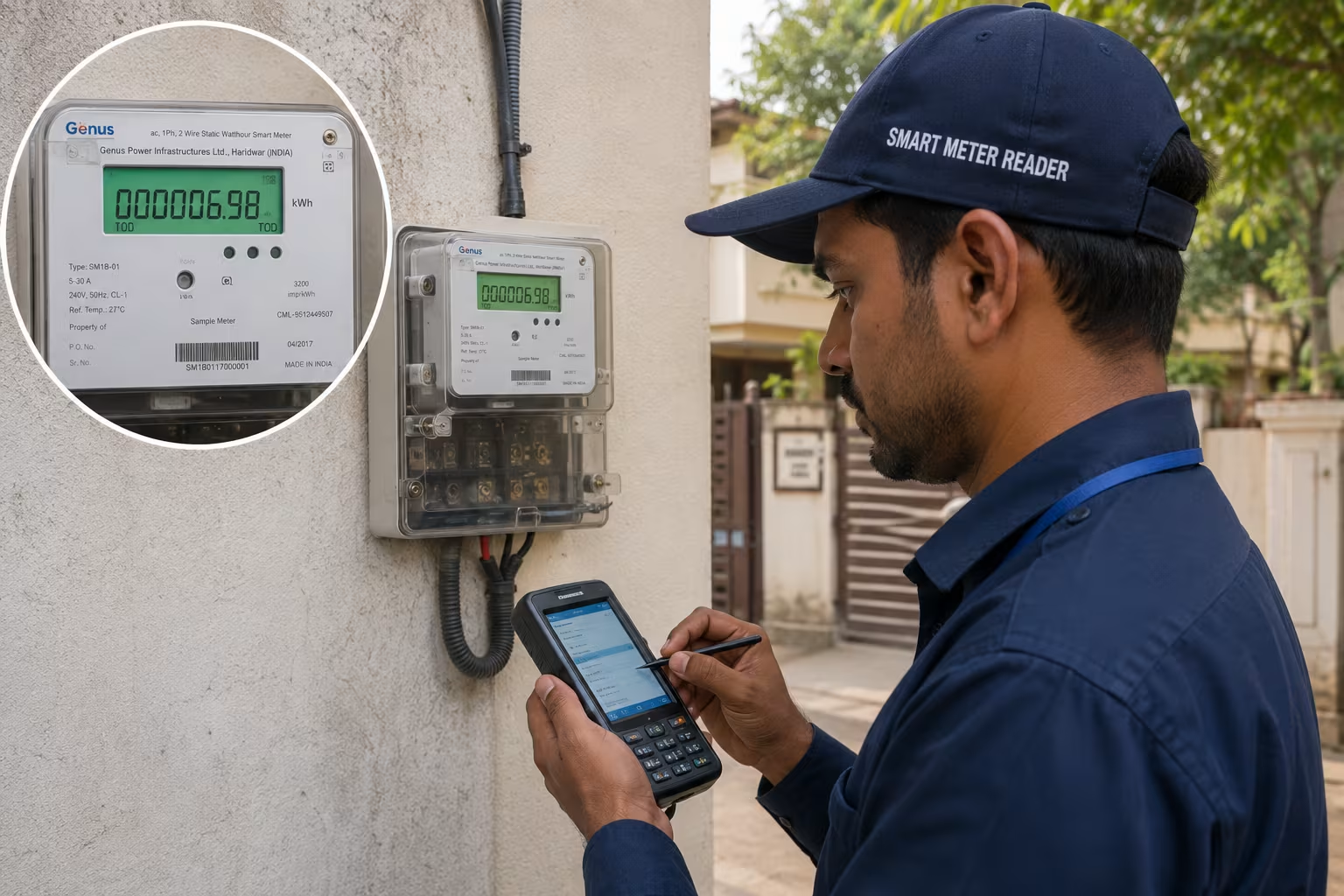
Electricity meters are slowly becoming more digital in India. Earlier, most homes had normal meters where a person from the electricity department had to visit, check the reading, and then the bill was prepared. A smart meter reader makes this process more accurate and automatic.
A smart meter reader records electricity usage digitally and can send the reading to the electricity company through a communication network. This helps in accurate billing, better monitoring, and faster detection of issues like unusual usage or meter tampering. Tata Power explains smart energy meters as meters that support real time consumption tracking, accurate billing, and better energy control for users.
For solar users, smart meters become even more important. When a home installs rooftop solar, the meter must correctly record how much electricity is taken from the grid and how much extra solar power is sent back. This is where smart meter reading, bidirectional meters, and net metering become important for proper billing.
What Is a Smart Meter Reader?
A smart meter reader is an advanced electricity meter that records your electricity consumption digitally. It measures how many units of electricity you use and can send that data to the DISCOM or electricity company automatically.
In simple words, it is like a normal electricity meter, but smarter. It does not fully depend on manual checking. It can help reduce reading mistakes, estimated bills, and billing delays. Some smart meters also allow users to track their electricity usage through an app, display, or online portal, depending on the DISCOM facility.
The biggest difference in smart meter vs normal meter is data visibility. A normal meter only shows the reading, while a smart energy meter can record, store, and communicate usage data. This makes electricity monitoring easier for both users and electricity companies.
How Does a Smart Meter Reader Work?
A smart meter reader works step by step. It records your electricity use, stores the data, sends it to the electricity provider, and helps create a more accurate bill.
Step 1: It Measures Electricity Usage
The smart meter first measures how much electricity your home, shop, office, or building is using. This electricity usage is recorded in kWh, which is commonly called units in electricity bills.
For example, if your home uses fans, lights, fridge, washing machine, geyser, AC, or other appliances, the smart meter keeps tracking the total electricity consumed by all these devices.
Step 2: It Stores the Reading Digitally
After measuring the electricity usage, the meter stores the reading digitally. This is different from older meters where the reading had to be checked manually by a meter reader.
Digital storage helps reduce manual errors. It can also keep records for different time periods, depending on the meter type and DISCOM system. This makes it easier to check past usage and billing data.
Step 3: It Sends Data to the Electricity Provider
The smart meter then sends the usage data to the electricity provider through a communication system. This may happen through mobile network, radio frequency, power line communication, or other AMI systems used by the DISCOM.
This automatic data transfer is one of the main reasons smart meters are being introduced in India. The Ministry of Power’s Revamped Distribution Sector Scheme also includes prepaid smart metering and advanced metering infrastructure to improve electricity distribution, billing, and energy accounting.
Step 4: The Electricity Bill Is Generated
Once the electricity company receives the reading, the bill can be generated based on actual recorded consumption. This helps reduce estimated bills and manual reading mistakes.
For users, this means the bill should match actual usage more closely. However, if there is wrong configuration, communication failure, tariff misunderstanding, or old under billing getting corrected, some users may feel that the bill has suddenly increased.
Step 5: Users Can Track Their Consumption
In many smart meter systems, users can track their electricity consumption through an app, portal, or display. This helps users understand which habits increase the bill.
For example, if your bill rises during summer because of AC usage, a smart meter can help you notice the increase more clearly. This makes it easier to control electricity use instead of waiting for the monthly bill.
Step 6: It Helps Detect Issues Faster
Some smart meters can support outage alerts, tamper alerts, voltage issue alerts, and unusual consumption tracking. This helps DISCOMs detect problems faster and manage the electricity network better.
For users, this can mean quicker issue identification. But the final experience depends on how well the local DISCOM’s smart meter system, app, and communication network are working.
Types of Smart Meter Readers
Different types of smart meters are used based on connection type, billing method, load requirement, and solar installation needs.
Prepaid Smart Meter
A prepaid smart meter works like a mobile recharge. The user recharges first and then uses electricity. If the balance is low, the user has to recharge again.
This can help users control electricity spending because they can see usage and balance more clearly. However, prepaid systems need a smooth recharge and reconnection process. Recent reports from some states show that users may face issues if recharge updates or supply restoration are delayed, so DISCOM execution matters a lot.
Postpaid Smart Meter
A postpaid smart meter records electricity usage digitally, but the user pays after consumption, just like a normal monthly electricity bill.
This is easier for users who do not want to recharge electricity in advance. It still gives the benefit of digital smart meter reading and accurate consumption records.
Single Phase Smart Meter
A single phase smart meter is mostly used in small homes with normal electricity loads. It is suitable for households that use basic appliances like fans, lights, TV, fridge, washing machine, and small kitchen appliances.
This type is common for residential users with lower electricity load.
Three Phase Smart Meter
A three phase smart meter is used where the electricity load is higher. This may include large homes, shops, offices, commercial buildings, small industries, or homes with heavy appliances.
If a property uses multiple ACs, motors, heavy machines, or large electrical loads, a three phase connection and meter may be required.
Bidirectional Smart Meter for Solar
A bidirectional smart meter is important for rooftop solar systems. It records electricity in two directions: power imported from the grid and extra solar power exported back to the grid.
For on grid rooftop solar users, this meter is very important because it helps calculate net billing. Without proper import and export reading, the solar benefit may not be recorded correctly.
Smart Meter Reader Cost in India
The cost of a smart meter reader in India depends on meter type, connection phase, DISCOM rules, communication system, installation charges, and whether the meter is used for normal billing or rooftop solar.
| Smart Meter Type | Approx Cost Range in India | Common Use |
|---|---|---|
| Single Phase Smart Meter | ₹2,000 to ₹5,000 approx | Small homes |
| Three Phase Smart Meter | ₹5,000 to ₹12,000 approx | Large homes, offices, shops |
| Prepaid Smart Meter | Cost depends on DISCOM and connection type | Homes, rental properties, government rollouts |
| Bidirectional Smart Meter | ₹3,000 to ₹10,000 approx | Rooftop solar systems |
| Industrial Smart Meter | Higher, based on load and features | Factories and large commercial sites |
These are broad market estimates. The actual amount paid by a user can change based on the local electricity board, sanctioned load, meter phase, solar net metering requirement, and current government rollout. Under RDSS, the central grant support for prepaid smart metering is mentioned as ₹900 or 15% of the cost per consumer meter, whichever is lower, for other than special category states.
Smart Meter Reader and Rooftop Solar Connection
For rooftop solar users, the meter is not just a billing device. It becomes the main record of how much power your home takes from the grid and how much extra solar energy your system sends back.
| Point | What It Means for Rooftop Solar Users |
|---|---|
| Import Reading | Shows how much electricity your home takes from the grid when solar generation is low, such as at night, during cloudy weather, or when appliance load is higher than solar output. |
| Export Reading | Shows how much extra solar electricity your rooftop system sends back to the grid when your solar generation is higher than your home’s current usage. |
| Net Metering Support | Helps calculate the final electricity bill after adjusting grid import and solar export, as per local DISCOM rules and applicable solar policy. |
| Bidirectional Meter Role | A bidirectional meter is important because it records both incoming electricity from the grid and outgoing solar electricity sent back to the grid. |
| Better Solar Monitoring | Users can understand whether their rooftop solar system is actually reducing grid dependency and monthly bills. |
| Accurate Billing | Reduces confusion because the bill can show import, export, and net consumption more clearly instead of only total electricity consumed. |
| DISCOM Approval | For rooftop solar, meter installation or replacement usually happens through the local DISCOM process after application, inspection, and approval. |
| Practical User Benefit | Solar users can track whether their system is generating useful savings over time and whether there is any mismatch between expected and actual performance. |
A normal meter mainly records electricity consumed from the grid. A bidirectional or net meter records both grid import and solar export. This is why rooftop solar users should confirm the right meter type before installation, especially for on grid solar systems.
Benefits and Limitations of Smart Meter Reader
Smart meters offer many benefits, but users should also understand their limitations. The technology is useful, but the final experience depends on DISCOM execution, correct configuration, app support, and consumer awareness.
| Benefits of Smart Meter Reader | Limitations of Smart Meter Reader |
|---|---|
| Gives more accurate billing based on actual recorded usage | Initial meter or installation cost may apply depending on DISCOM rules |
| Reduces manual meter reading errors | Data transfer may depend on communication network availability |
| Helps users track electricity consumption better | App or portal access may not be smooth or available everywhere |
| Makes it easier to identify high usage habits | Some users may have privacy concerns about consumption data |
| Can support outage, tamper, or voltage alerts in some cases | Technical faults or wrong configuration can create billing confusion |
| Useful for rooftop solar when paired with bidirectional metering | A smart meter and solar net meter may not always be the same thing |
| Helps DISCOMs improve billing and electricity distribution | Users may need guidance to read and understand smart meter data properly |
On Reddit, many users discuss high electricity bills after smart meter installation. Some users feel smart meters run faster, while others point out that older meters may have under recorded usage or that tariff slabs, fixed charges, AC usage, and seasonal consumption may explain the rise. These discussions show one important thing: users need clear meter data, bill explanation, and complaint support when smart meters are installed.
Smart Meter Reader Under Government and DISCOM Rollout
Smart meters are being rolled out in India through government supported programmes and DISCOM projects. The goal is to improve billing accuracy, reduce losses, reduce manual work, improve power distribution, and make electricity systems more digital.
| Programme or Rollout Area | What It Means for Users |
|---|---|
| Revamped Distribution Sector Scheme | RDSS supports prepaid smart metering and distribution infrastructure modernisation to improve billing, energy accounting, and DISCOM efficiency. |
| National Smart Grid Mission | NSGM was set up by the Government of India to accelerate smart grid deployment in India. |
| India Smart Metering Status | Official dashboard data shows large scale smart meter deployment across India, with sanctioned, installed, and ongoing numbers tracked state wise. |
| Indore and MPPKVVCL Area | MPPKVVCL has been reported to be installing smart meters on 11 kV feeders for detailed electricity supply audit in Indore region. |
| Prepaid Metering in Malwa Nimar | Reports mention prepaid electricity rollout beginning with government offices in the Malwa Nimar region, including Indore offices, before wider phases. |
For Indore users, the final process depends on M.P. Paschim Kshetra Vidyut Vitaran Company, connection type, area rollout, and whether the meter is being installed for normal billing or rooftop solar net metering. If you are planning rooftop solar, it is better to confirm the metering process before installation so that your solar import and export billing is handled correctly.
Why Choose Sunheaven Energy for Solar and Metering Guidance?
For a normal electricity connection, the smart meter process is usually handled by the DISCOM. But for rooftop solar, users often need guidance on whether they need a smart meter, bidirectional meter, or net meter. This is where proper solar consultation becomes important.
Sunheaven Energy can help Indore homeowners and businesses understand the metering requirement before solar installation. The team can guide users on rooftop inspection, solar system design, DISCOM process, net metering support, documentation, and after installation guidance.
This matters because solar savings depend not only on panels and inverter, but also on correct metering. If import and export readings are not handled properly, users may not clearly understand their solar benefit. A reliable solar partner helps users avoid confusion and makes the process easier.
Final Thoughts
A smart meter reader is not just a digital version of a normal meter. It helps record electricity usage more accurately, supports better smart meter reading, and gives users more clarity about power consumption. For rooftop solar users, the right meter becomes even more important because it records both electricity taken from the grid and extra solar power exported back. Whether you are a homeowner, business owner, or planning solar installation in Indore, understanding smart meters can help you make better energy decisions with more confidence.
FAQs on Smart Meter Reader
What is a smart meter reader?
A smart meter reader is a digital electricity meter that records power consumption and can send usage data to the electricity provider automatically. It helps improve billing accuracy and reduces manual meter reading.
How does a smart meter reader work?
It measures electricity usage in units, stores the reading digitally, sends data to the electricity company, and helps generate accurate bills. Some smart meters also allow users to track consumption through an app or portal.
What is the cost of a smart meter reader in India?
A smart meter reader can cost around ₹2,000 to ₹12,000 for common residential and commercial use, depending on meter type, phase, DISCOM rules, and installation charges. Industrial meters or advanced metering systems can cost more.
Is a smart meter compulsory for rooftop solar?
For rooftop solar, a bidirectional or net meter is usually required to record both import and export of electricity. Whether it is called a smart meter or net meter depends on the DISCOM process and meter type.
What is the difference between a smart meter and a normal meter?
A normal meter mainly records electricity consumption and usually needs manual reading. A smart meter records data digitally and can send readings automatically to the electricity provider.
What is the difference between smart meter and bidirectional meter?
A smart meter records and communicates electricity usage digitally. A bidirectional meter records electricity in two directions, import from the grid and export to the grid. For rooftop solar, bidirectional reading is very important.
Can a smart meter reduce electricity bills?
A smart meter does not directly reduce your bill. But it helps you track usage better, identify high consumption habits, and avoid estimated billing errors. This can help users control electricity consumption.
Are smart meter readings accurate?
Smart meters are designed for accurate digital reading, but errors can still happen due to wrong configuration, communication issues, defective meter, or billing system problems. If the bill looks unusual, users should raise a complaint with the DISCOM.
Can smart meters work without internet?
Smart meters do not usually depend on the user’s home internet. They use the communication system selected by the DISCOM, such as mobile network, RF, PLC, or AMI network. If the communication network fails, data transfer may get delayed.
Who installs a smart meter, DISCOM or solar company?
For normal electricity connections, the DISCOM usually handles smart meter installation or replacement. For rooftop solar, the solar company may guide the process, but meter approval and installation generally happen through the local DISCOM system.