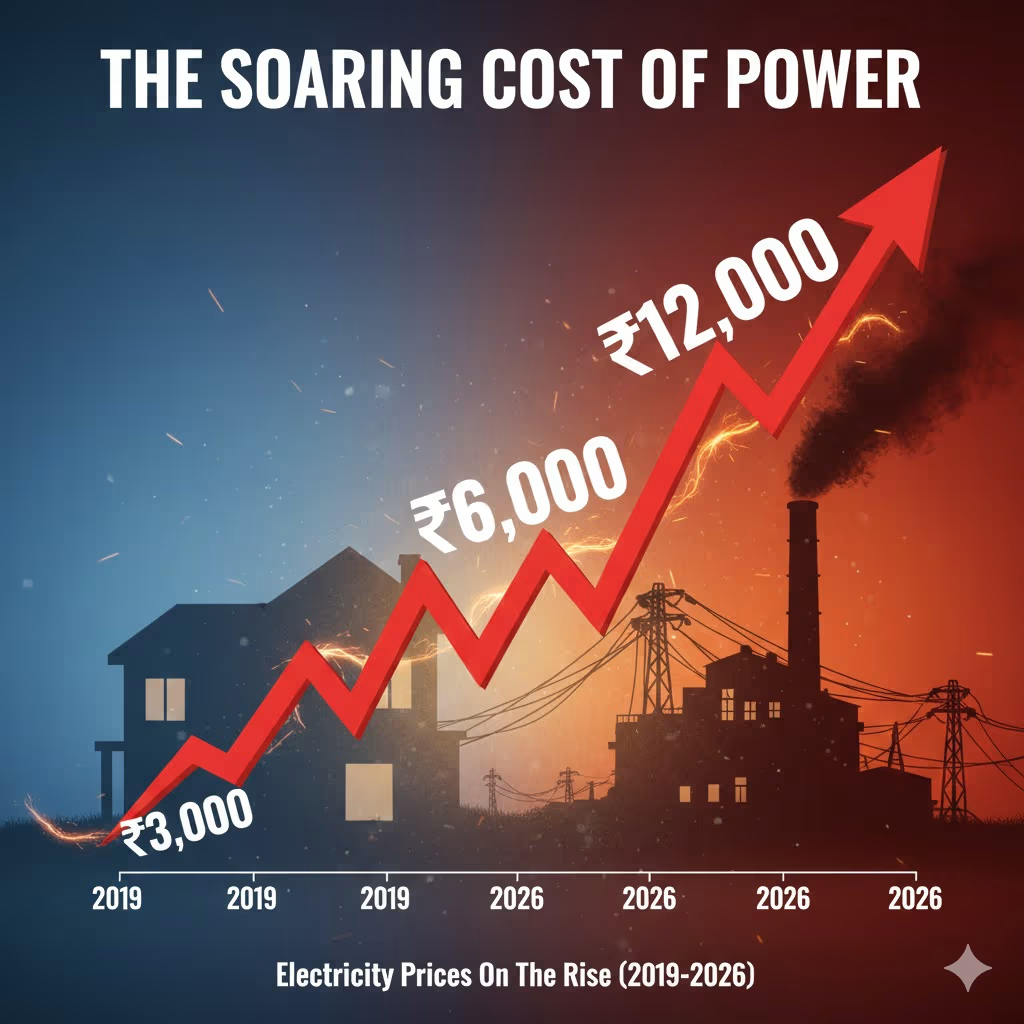
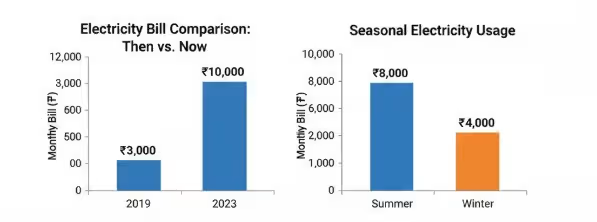
Electricity costs in Indore have become a growing concern for residents and businesses alike. As of 2026, many middle-income households are reporting monthly electricity bills ranging from ₹8,000 to ₹10,000, especially during peak summer months when air conditioners and cooling appliances are in constant use. This represents a significant jump compared to 2019–2021, when similar households typically paid around ₹3,000–₹5,000 per month.
The rising bills are not just about usage — they reflect structural changes in how electricity is priced, how households consume power, and how the grid manages demand. In this blog, we’ll break down the real reasons behind rising electricity bills in Indore, and then explore how rooftop solar panels can directly address these issues, bringing long-term savings and energy independence.
Understanding the Electricity Bill Problem in Indore (2026)
A Growing Demand for Electricity — Not Just Usage
In recent years, Indore has seen a rapid increase in household electricity consumption patterns. Modern living standards have shifted significantly: families now operate multiple high-power appliances such as air conditioners, refrigerators running 24/7, water heaters, washing machines, and a range of entertainment and work-from-home electronics.
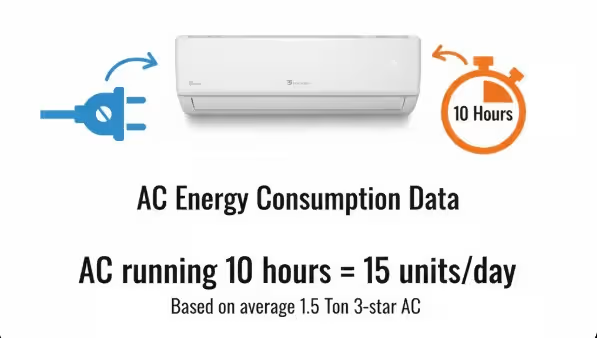
These appliances, especially ACs in summer, are heavy electricity consumers. A typical 1.5-ton inverter AC can draw 1.2–1.6 units of electricity per hour. When such units run for 10–12 hours during peak summer months (March to June), residential consumption easily climbs into higher tariff slabs. Unlike lower slabs, where units cost less, higher slabs impose a steep per-unit charge.
This structural bill escalation means even moderate increases in usage cause disproportionately higher bills.
Tariff Structure and Rising Unit Costs
Electricity billing in Madhya Pradesh, which applies to Indore through the local power utility, uses a slab-based tariff system. Under this system:
- Lower ranges of monthly units are billed at relatively low per-unit prices
- As total consumption increases, later units are billed at higher per-unit rates
- A slight rise in overall consumption — such as from 350 to 450 units per month — can push an account into costlier slabs
These tariff slabs are determined by the electricity regulatory authority and reviewed periodically. Any upward revision, even by a few percent, directly translates into higher total bills.
The upfront investment becomes more affordable when homeowners take advantage of the solar panel subsidy in India.
Seasonal Peaks and Summer Load Pressure
Indore’s summers are long and intense, often exceeding 40°C on many days. Heavy use of air conditioners, coolers, and fans becomes unavoidable. This seasonal demand puts pressure on the grid and increases individual household consumption. During peak months, it’s common for residential electricity usage to spike by 25–40% compared to winter months.
This accentuates the impact of the slab structure: when consumption goes up in summer, households move into higher slabs, and the per-unit cost multiplies. The result: bills that feel disproportionately high relative to actual usage increases.
Fixed Charges and Non-Energy Components
Electricity bills are not just about the number of units consumed. They also include fixed and regulatory charges, such as:
- Fixed charges based on sanctioned load (₹ per kW per month)
- Fuel cost adjustments
- Electricity duty
- Meter rent and service charges
These are often overlooked, but they contribute a consistent cost every month regardless of consumption. For many families, fixed costs can make up 15–25% of the total bill, making it difficult to reduce bills simply by cutting usage.
How Solar Panels Solve Rising Electricity Bill Issues
Solar Power Generates Electricity at the Point of Use
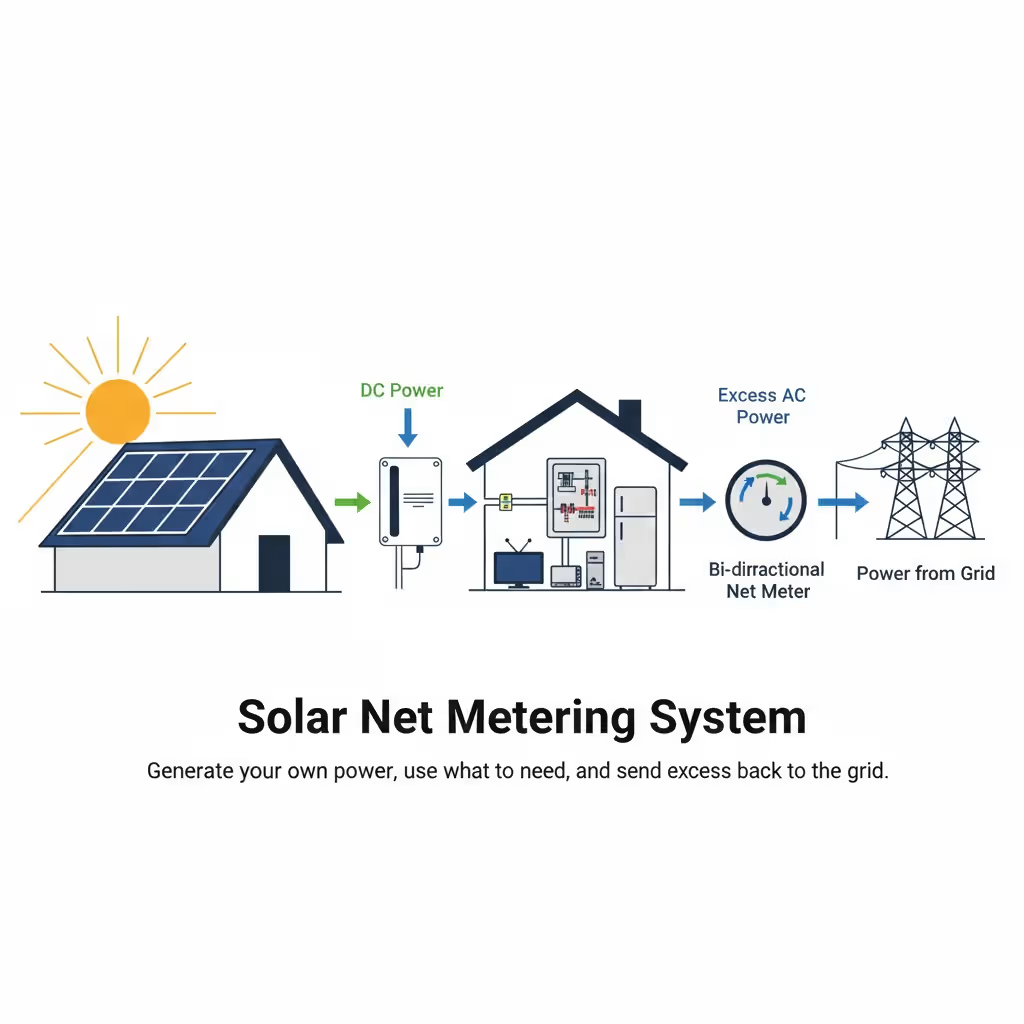
Rooftop solar systems generate electricity right where it is consumed — on your roof. During daylight hours, solar panels convert sunlight into electrical energy that can be used immediately by your home or business.
For a typical Indore household that uses most of its electricity during the day — fans, lighting, refrigerators, and even air conditioners — solar generation directly matches consumption patterns. This means:
- Less power is drawn from the grid
- Lower total units imported from the electricity provider
- Reduced movement into higher tariff slabs
Understanding the types of solar panels available in India can also help you choose a system that delivers better efficiency for your property.
Net Metering Helps Offset Grid Usage
In Indore, solar systems connected through net metering allow excess power generated during the day to be exported to the grid. This exported power is tracked by a bi-directional meter. In subsequent billing cycles:
- Units sent to the grid are credited against units drawn from the grid
- Your final electricity bill reflects net usage (grid import minus solar export)
This is especially useful during months with strong solar generation, as excess daytime production can offset night-time grid use.
To understand how savings begin after setup, you can also read about the solar panel installation process in Indore.
Stabilising Costs Against Future Tariff Hikes
Electricity tariffs tend to go up over time due to fuel costs, power purchase costs, and regulatory revisions. Once a rooftop solar system is installed, the cost of generating electricity becomes essentially fixed — limited to maintenance costs rather than per-unit charges.
This protects households from unpredictable and ongoing tariff increases over the lifetime of the solar system, which typically spans 25+ years.
Real-Life Savings in Indore Households (With ROI Charts)
Consider a mid-sized home in Indore with a monthly grid bill of ₹9,000 in summer 2026. A rooftop solar system sized appropriately (e.g., 3-5 kW depending on load and roof space) could:
- Supply a large portion of daytime electricity demand.
- Reduce net units drawn from the grid.
- Keep households within lower tariff slabs.
- Provide bill credits through net metering.
ROI for a Typical 3 kW System (Net cost ₹1,37,000 after subsidy; ₹36,000 annual savings, 5% tariff growth): Payback in 4 years, total 25-year savings ₹17.2 lakh (12x return).
For many medium-sized homes in Indore, understanding the 3kW solar system cost in India can help you estimate realistic long-term electricity savings.
| Year | Annual Savings (₹) | Cumulative (₹) |
|---|---|---|
| 0 | 0 | -1,37,000 |
| 4 | 41,675 | +1,55,164 |
| 10 | 55,848 | +4,52,804 |
| 25 | 1,16,104 | +17,18,176 |
Over time, this translates into monthly savings that can significantly offset rising grid costs.
If you are evaluating the investment, it also helps to understand the full solar installation cost in Indore before making a decision.
Energy Independence and Reliability
Unlike grid electricity, which is subject to transmission losses, outages, and tariff changes, solar generation is stable and predictable as long as the sun shines. In Indore, where sunny days are high most of the year, solar power improves energy reliability and reduces dependency on grid supply.
For homes looking for backup support along with savings, a hybrid solar system in India can be a practical option.
Considering Solar in Indore?
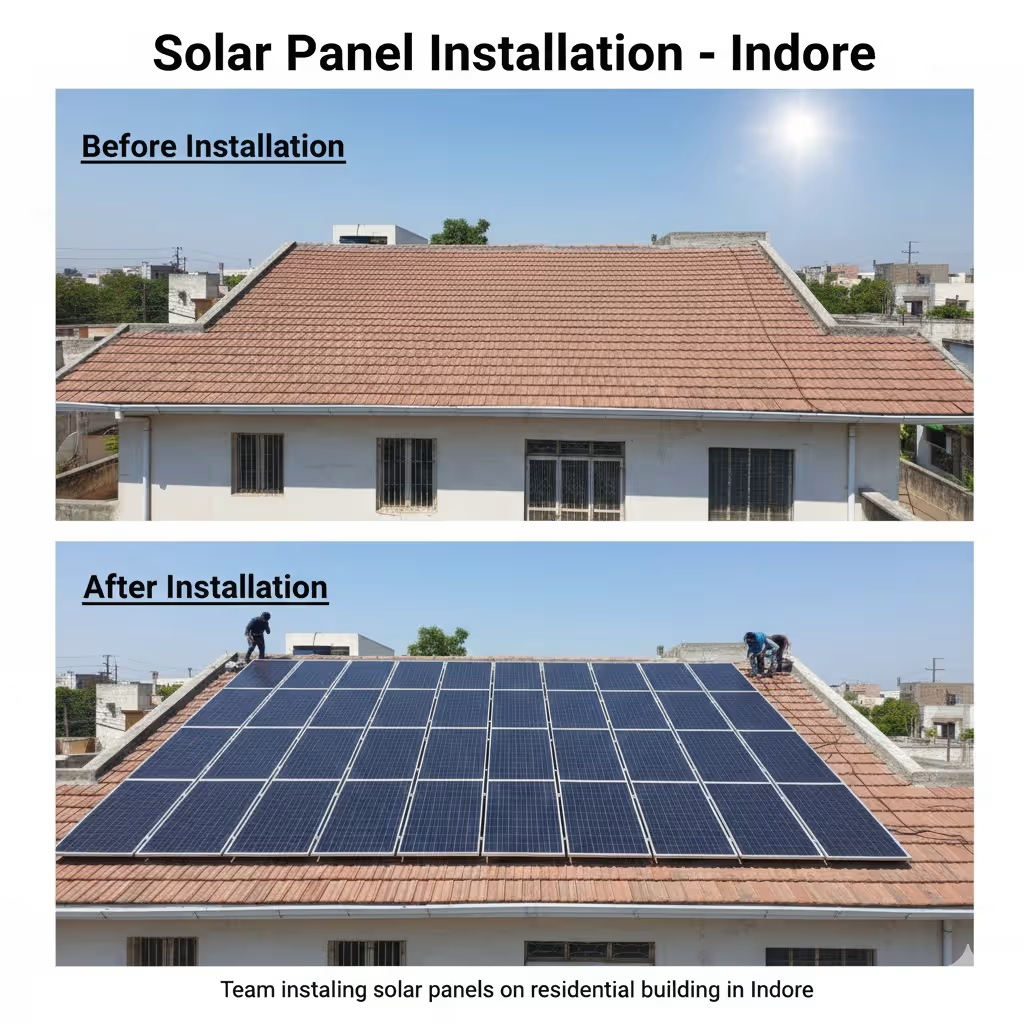
For residents in Indore considering rooftop solar as a solution to rising electricity bills, the technical execution of the system plays a critical role in actual savings. Proper load calculation, correct inverter sizing, and compliance with local net metering regulations directly affect performance. Local installers who understand Indore’s climate, roof structures, and DISCOM approval processes ensure the system is designed for maximum efficiency. In Indore, companies such as Sunheaven Energy work specifically within these regional requirements, handling technical design, documentation, and installation standards in alignment with current regulations.
If you are planning a customised rooftop setup for your home or business, explore our rooftop solar installation in Indore solutions.
Conclusion
Rising electricity bills in Indore are a result of higher consumption, slab-based tariff escalation, seasonal peak demands, and fixed regulatory costs. For many households in 2026, monthly bills of ₹8,000 to ₹10,000 are no longer unusual.
Rooftop solar panel systems solve these issues by generating power at the point of use, reducing grid dependency, leveraging net metering credits, and providing long-term cost stability independent of tariff hikes.
For residents and businesses facing rising electricity costs in Indore, understanding and adopting solar solutions is not just an energy choice — it’s a financial strategy for the long term.
FAQs
Why has my electricity bill suddenly increased in Indore in 2026? Electricity bills in Indore have increased mainly due to higher summer consumption, slab-based tariff escalation, and revised electricity duty and fixed charges. Even a small rise in total units can push households into higher tariff slabs, increasing the overall bill amount disproportionately.
How much electricity does a 1.5 ton AC consume in Indore summer? A typical 1.5 ton inverter AC consumes around 1.2 to 1.6 units per hour depending on efficiency. If it runs for 8 to 10 hours daily during peak summer, it can significantly increase monthly consumption and push bills into higher tariff brackets.
Why is my bill high even though I did not increase usage? Even if usage feels similar, slab rates and fixed charges can increase year over year. Seasonal variations, fuel cost adjustments, and higher per-unit pricing beyond certain limits can raise total bills even without noticeable lifestyle changes.
Can solar panels reduce my electricity bill completely in Indore? Solar panels can significantly reduce your grid dependency, especially during daytime usage. However, complete elimination of the bill depends on system size, consumption pattern, and whether the system is connected under net metering.
How many units does an average 3BHK home in Indore consume per month? In 2026, a mid-sized 3BHK home with AC usage can consume between 500 to 900 units per month during summer. This consumption range often places households in higher tariff slabs, leading to monthly bills between ₹8,000 and ₹10,000 or more.
Is solar really worth it for rising electricity bills in Indore? For households consistently crossing mid to high consumption slabs, solar becomes financially logical. It offsets daytime grid usage, reduces exposure to future tariff hikes, and stabilises long-term electricity expenses.