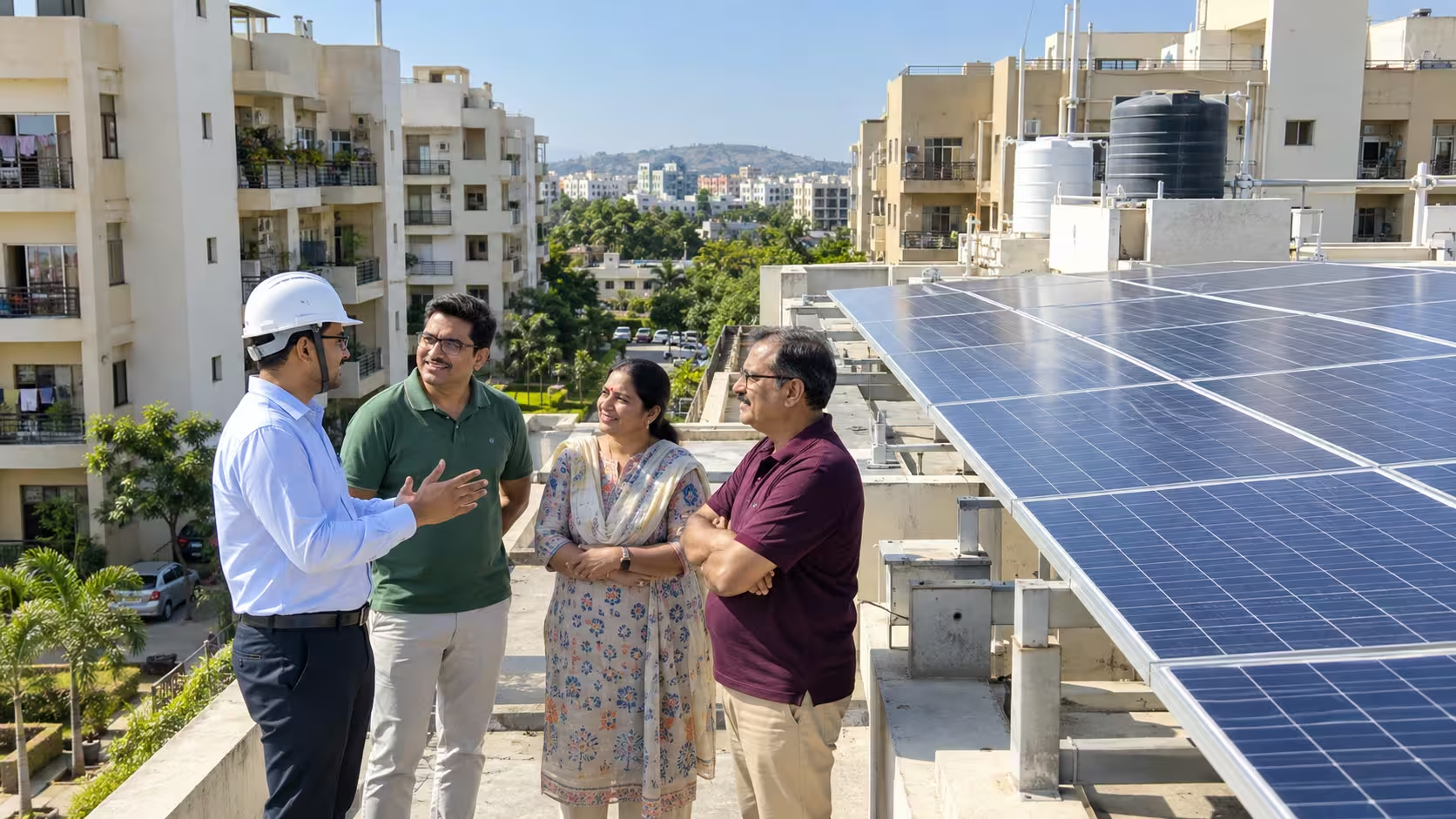
More and more housing societies in Indore are putting solar panels on their rooftops. The reason is simple: shared areas like lifts, water pumps, and lights run all day, and their electricity bills keep rising.
Solar helps bring these bills down and gives every resident a share of the savings.
This guide explains, in easy words, why so many societies are making the switch in 2026.
What "Solar for a Housing Society" Means
Solar for a society means one shared rooftop system that powers the common facilities of the building, such as:
- Lifts
- Water pumps
- Corridor lights
- Garden lights
- Security systems
The society installs and runs the system, and the savings flow to everyone.
Lower common-area bills mean lower monthly maintenance charges for all residents.
Why Indore Societies Are Turning to Solar in 2026
A few clear reasons are driving the shift this year:
- Rising common-area bills: Shared facilities run all day, and MPPKVVCL tariffs keep going up each year.
- Special society subsidy: The government now gives a dedicated subsidy for common-facility solar.
- Strong sunlight: Indore gets good sun almost all year, so rooftops generate well.
- Long-term savings: Once installed, solar keeps cutting bills for 25 years or more.
Top Reasons Housing Societies in Indore Are Choosing Solar
Big Cut in Common-Area Electricity Bills
Common facilities run day and night and use a large share of a society's power.
Solar can cover much of this during the day, cutting the common-area bill sharply.
Lower Monthly Maintenance for Every Resident
When the common-area bill drops, the society spends less.
This directly lowers the monthly maintenance (CAM) charge that each flat pays.
Government Subsidy for Societies
Under the PM Surya Ghar scheme, societies get a special subsidy of ₹18,000 per kW for common-facility solar, up to 500 kW.
This can lower the project cost by a large amount.
The society applies for it as a body, and the rules should be checked on the official portal before applying.
Protection From Rising Tariffs
Electricity rates keep going up.
Once solar is installed, the power it makes is free, so the society is protected from future price hikes.
Less Diesel Generator Use
During the day, solar can run many common loads, so the diesel generator is needed less.
This saves fuel money and reduces noise and smoke.
Low Maintenance and a Long Life
Solar panels have no moving parts.
They only need regular cleaning and simple checks, and they last 25 years or more, making them easy to manage.
Higher Property Value
Flats in a solar-powered society are more attractive to buyers.
A lower maintenance bill and a green building add to the value of every home.
A Cleaner, Greener Society
Solar is clean energy.
By switching, a society lowers its pollution and sets a positive example, which many residents feel proud of.
Easy Monitoring and Transparency
Modern systems come with an app that shows how much power is made and used.
This gives the committee and residents a clear, honest view of the savings.
How Societies Pay for Solar: CAPEX vs OPEX
Societies can pay for solar in two main ways.
The table below shows the difference:
| Model | Upfront Cost | Who Owns the System | Best For |
|---|---|---|---|
| CAPEX | Society pays the full cost | The society | Societies that want the most long-term savings |
| OPEX (RESCO) | No upfront cost | A solar company, for a fixed number of years | Societies that want zero investment and pay only per unit used |
In the CAPEX model, the society invests once and keeps all the savings.
In the OPEX model, the society pays nothing upfront and simply buys solar power at a lower rate.
How a Society Can Go Solar: Quick Steps
The process is simple when handled step by step:
- Pass a resolution in the society meeting (AGM) to approve solar.
- Complete a feasibility check of the rooftop and get approval from MPPKVVCL.
- Apply for the subsidy as a society on the official portal.
- Install the system through an experienced solar partner.
- Set up net metering so extra power earns credit under MPERC rules.
How Sun Heaven Energy Can Help
Going solar as a society has a few more steps than a single home, because many people and shared rules are involved.
A team that has done this before can make it smooth.
Here is how Sun Heaven Energy supports societies in Indore:
- Feasibility study of your rooftop to suggest the right system size.
- Subsidy paperwork to help the society claim the ₹18,000 per kW benefit correctly.
- DISCOM and net metering approvals handled with MPPKVVCL.
- Ongoing care (AMC) for solar for housing societies, including cleaning, checks, and monitoring.
Our aim is to help your committee understand the choices and make a confident, informed decision for the whole community.
Frequently Asked Questions
How much can a housing society save with solar?
Savings depend on the system size and common-area usage, but solar can cut a large part of the common-area bill, which lowers maintenance charges for all residents.
Is there a subsidy for housing societies?
Yes. Societies can get ₹18,000 per kW for common-facility solar, up to 500 kW, under the PM Surya Ghar scheme.
Do individual flats also benefit?
Yes. Lower common-area bills reduce everyone's monthly maintenance. Flat owners can also apply separately for their own rooftop share, subject to the scheme rules.
CAPEX or OPEX, which is better?
CAPEX suits societies that can invest once and want the most savings. OPEX suits societies that prefer zero upfront cost and pay per unit.
How long is the payback period?
Most society solar systems pay back the investment in about 3 to 5 years, and then keep saving for 20 years or more.