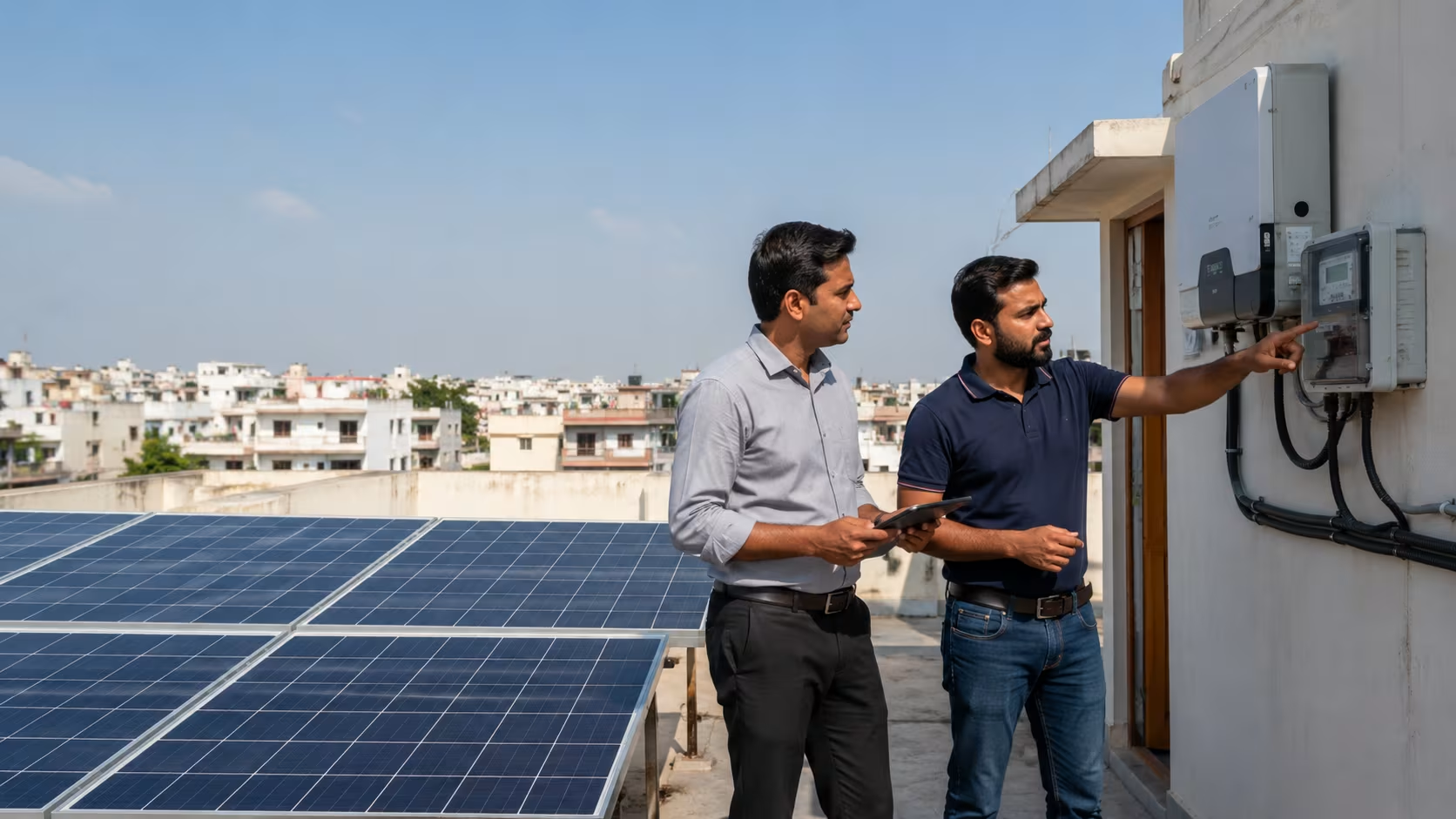
A solar battery stores power made by your panels during the day, so you can use it at night or during a power cut. Many homeowners in Indore ask two simple questions before buying one: how much does it cost, and how many hours of backup will it give?
This guide answers both in easy words, using current 2026 prices.
Solar Battery Cost and Backup in Indore: Quick Answer
A small solar battery, around 2 kWh, starts at about ₹55,000 to ₹70,000 and can run a few lights, fans, and a TV for a few hours.
A mid-size battery, around 5 kWh, costs about ₹1.8 to ₹2.5 lakh installed and can back up a normal home's basic needs for a longer time.
The exact backup you get depends on how much power your appliances use. More load means fewer hours.
What a Solar Battery Actually Does
During the day, your solar panels often make more power than you use.
A battery saves this extra power instead of sending it all to the grid for net metering credit.
Later, at night or during a cut, the battery gives that power back to your home.
One important point: to get backup during a power cut, you need a hybrid inverter.
A normal on-grid solar system, without a battery and hybrid inverter, switches off during a power cut for safety and gives no backup.
What Decides a Solar Battery's Cost
Four things mainly decide the price:
- Capacity (kWh): A bigger battery stores more power and costs more.
- Battery type: Lithium batteries cost more than lead-acid ones.
- Brand and quality: Trusted brands with better warranties cost a little more.
- Hybrid inverter: If a hybrid inverter is included, the total price goes up.
When you compare quotes, always ask if the price is for the battery only, or for the full installation of solar system.
Also check the usable capacity, not just the label size.
A battery's printed size, called nameplate, is not always the power you can actually use.
Lithium batteries let you use most of their size, while lead-acid batteries let you use only about half.
So a battery that looks bigger on paper can sometimes give less real backup than a smaller one.
Lead-Acid vs Lithium: Which Suits Indore?
There are two common battery types, and they are quite different:
-
Lead-acid: Cheaper to buy, but it lasts only about 3 to 5 years and must be replaced sooner. You can safely use only around half of its stored power, it weakens faster in heat, and some types need a little care, like checking water levels.
-
Lithium (LiFePO4): Costs more at first, but it lasts around 10 years or more. You can use most of its stored power, it needs almost no care, and it handles heat much better.
Because Indore summers are very hot, lithium is usually the smarter long-term choice.
Over a 10-year period, a lead-acid battery may need replacing two or three times, while a lithium battery often lasts the whole time.
So even though lithium costs more today, it usually works out cheaper in the long run.
Solar Battery Cost by Size and Backup It Gives
The table below shows common battery sizes, their rough installed cost, and the backup they can give for basic home use.
These are indicative 2026 figures and vary by brand and setup.
| Battery Size | Typical Installed Cost | What It Can Run | Backup Time (Basic Use) |
|---|---|---|---|
| 2 kWh | ₹55,000 to ₹70,000 | A few lights, fans, TV, WiFi | About 2 to 3 hours |
| 3–4 kWh | ₹1.2 to ₹1.8 lakh | Lights, fans, fridge, TV | About 5 to 6 hours |
| 5 kWh | ₹1.8 to ₹2.5 lakh | Most basic home loads | About 6 to 8 hours |
| 10 kWh | ₹4 lakh and above | Larger homes, longer backup | Full evening or more |
Adding an air conditioner reduces these hours a lot, because an AC uses a large amount of power.
How Much Backup Will a Battery Provide?
Backup time is easy to understand with a simple idea.
A battery does not give out 100% of its stored power, for two reasons.
First, draining it fully every time shortens its life, so a safe limit is always kept.
Second, a little power is lost when the inverter changes the stored power into the form your home uses.
After both of these, you get around 80% of a lithium battery's size as real, usable power, and less for lead-acid.
So the rough formula is:
Usable power = Battery size × about 0.8
Backup hours = Usable power ÷ your load (in kW)
For example, a 5 kWh battery gives about 4 kWh of usable power.
If your home uses 0.5 kW (500 watts) for lights, fans, and a fridge, that is about 8 hours of backup.
But if you switch on an AC, the load jumps and the hours drop sharply.
How to Size the Right Battery: Simple Steps
You do not need to guess.
Just follow four steps:
- List your must-run items: Write down what you truly need during a cut, such as lights, fans, fridge, and WiFi, and their watts.
- Decide your backup hours: Check how long power cuts usually last in your area.
- Work out the kWh: Multiply your load in kW by the backup hours you want.
- Add a small buffer: Add a little extra so the battery is not fully drained each time.
This helps you buy the right size, so you do not overpay or fall short.
Here is a quick example.
Suppose you need:
- 2 fans, about 150 W together
- A fridge, 300 W
- Lights, 50 W
- WiFi, 10 W
That is about 510 W, or roughly 0.5 kW.
If power cuts in your area last about 4 hours, you need:
0.5 × 4 = 2 kWh
Adding a small buffer, a 3 kWh battery would be a safe choice for this home.
Does the Subsidy Cover the Battery?
This is important to know. The solar panel subsidy under the PM Surya Ghar scheme covers your solar panels, not the battery. Also, to use a battery for backup, you may need a hybrid inverter, which can add to the cost.
So plan your budget with the battery and inverter counted separately from the subsidy.
Is a Solar Battery Worth It in Indore?
It depends on your needs:
- If your area has a reliable power supply: You may not need a battery. An on-grid system alone will save you the most money.
- If you face frequent or long power cuts: Or you simply want steady backup, a battery is a worthwhile upgrade.
A battery is less about saving money and more about comfort and peace of mind during outages.
Unlike solar panels, which pay for themselves through lower bills, a battery rarely pays back through savings alone.
Its real value is keeping your fans, lights, and fridge running when the power goes off.
So choose it based on how often and how long your power goes off, not only on cost.
How Sun Heaven Energy Can Help
Choosing the right battery can be confusing, because size, type, and inverter all matter.
A local team can guide you clearly.
Here is how Sun Heaven Energy helps homeowners in Indore:
- Load study to find the correct battery size for your home.
- Right battery type for Indore's climate, so it lasts longer.
- Hybrid inverter guidance for your hybrid solar system, explained in simple words.
- Full installation and support for your residential solar setup.
Our aim is to help you pick the right backup for your real needs, not to sell you a bigger battery than you require.
Frequently Asked Questions
What is the cheapest solar battery option?
Lead-acid batteries are the cheapest to buy. But because they have a shorter life, lithium often costs less over many years.
How long does a 5 kWh battery last during a power cut?
About 6 to 8 hours for basic home use, including lights, fans, and a fridge. Running an AC will reduce this a lot.
Lithium or lead-acid, which is better?
For Indore's hot climate, lithium is usually better. It lasts longer and handles heat well, though it costs more upfront.
Is the solar battery covered by the government subsidy?
No. The subsidy covers the solar panels only, not the battery or the hybrid inverter.
Can I add a battery later?
Yes, but it is easier if your inverter already supports a battery. Tell your installer in advance if you may add one later.