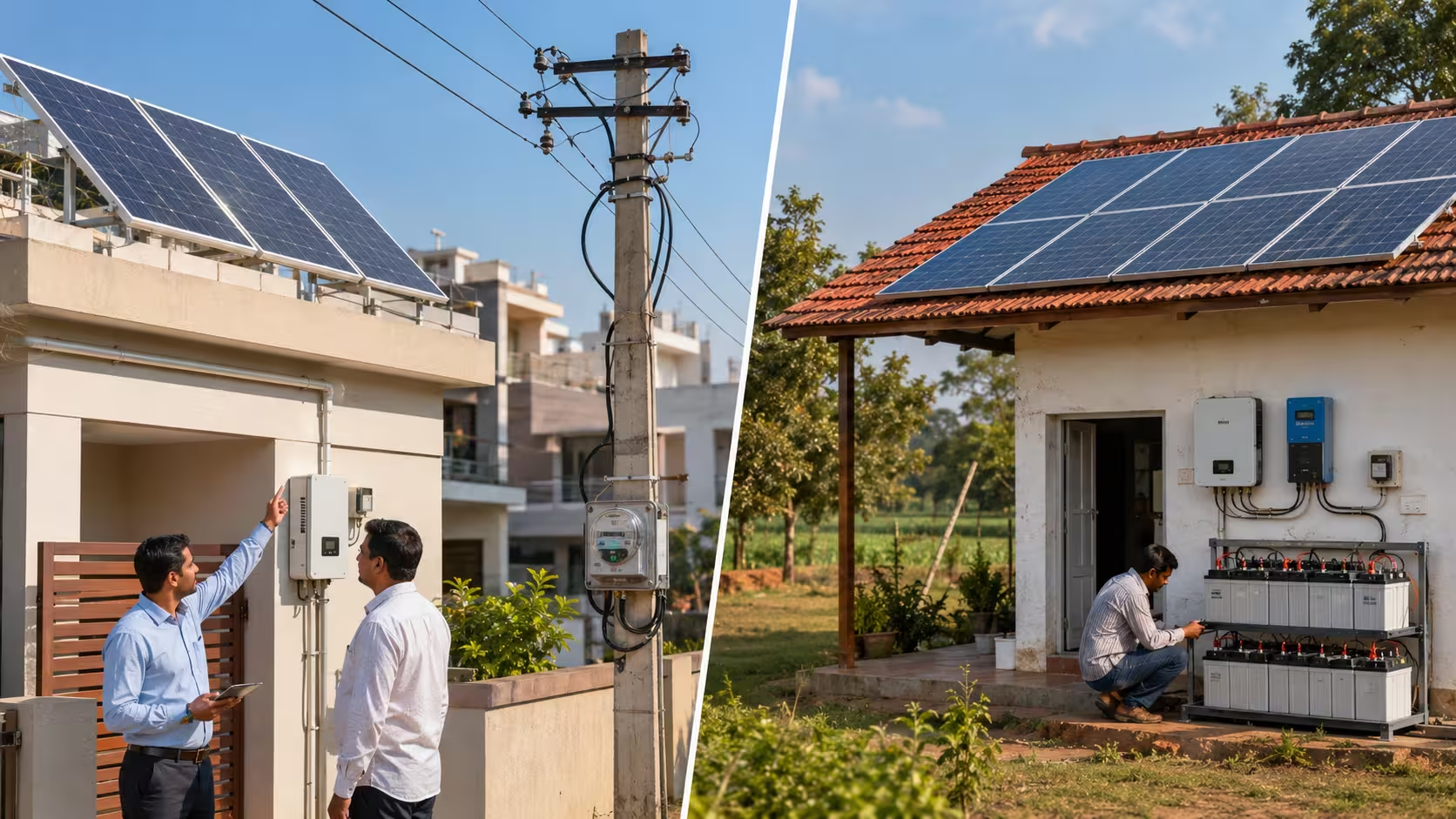
Choosing the right solar system is an important decision before installing solar panels. Many people know that solar panels generate electricity, but they are often confused about how the electricity is used and stored.
The two most common types of solar systems are on-grid solar systems and off-grid solar systems.
The main difference is simple:
- On-grid solar system: Works with your existing electricity connection and helps reduce electricity bills.
- Off-grid solar system: Works independently using batteries to store solar energy and provide power when needed.
The right choice depends on your electricity usage, location, requirement for backup power and budget.
What Is An On Grid Solar System?
An on-grid solar system is a solar system that is connected to the main electricity grid.
In this system, solar panels installed on your rooftop generate electricity during the day. This electricity is first used to run your home appliances such as fans, lights, refrigerators and air conditioners.
If your solar panels generate more electricity than your home needs, the extra electricity can be sent back to the electricity grid through a process called net metering. This exported electricity is adjusted according to the applicable electricity rules.
When your solar panels are not generating enough electricity, such as during the night or on cloudy days, your property can use electricity from the grid.
Example:
Suppose your home uses 15 units of electricity in a day:
- Your solar panels generate 10 units.
- Your home uses those 10 solar units first.
- The remaining 5 units are taken from the electricity grid.
This reduces your dependence on grid electricity and can help lower your electricity bill.
Important Point: An on-grid solar system usually does not provide electricity during a power cut because it depends on the electricity grid to operate safely.
What Is An Off Grid Solar System?
An off-grid solar system is a solar system that works independently without depending on the electricity grid.
In this system, solar panels generate electricity during the day, and the extra electricity is stored in batteries. This stored energy can be used when sunlight is not available, such as at night or during a power outage.
Example:
Imagine a farmhouse or remote location where electricity supply is not regular.
During the day:
- Solar panels generate electricity.
- Extra electricity is stored in batteries.
During the night or power cut:
- Stored battery power is used to run appliances like lights, fans and essential equipment.
Important Point: An off-grid solar system can provide backup power because it stores electricity in batteries.
Difference Between On Grid And Off Grid Solar System
| Factor | On Grid Solar System | Off Grid Solar System |
|---|---|---|
| Basic meaning | Solar system connected with the electricity grid | Solar system that works independently without grid support |
| How it works | Uses solar power along with electricity from the grid | Uses solar power stored in batteries |
| Battery requirement | Usually does not require batteries | Requires batteries for storing electricity |
| Power during outage | Does not provide electricity during grid power cuts | Can provide backup through stored battery power |
| Extra solar electricity | Can be sent back to the grid through net metering | Stored in batteries for future use |
| Initial cost | Lower because batteries are generally not required | Higher due to battery storage cost |
| Suitable for | Homes, offices and businesses with regular electricity supply | Remote areas or places with frequent power cuts |
Advantages And Limitations Of On Grid And Off Grid Solar Systems
| System Type | Category | Details |
|---|---|---|
| On Grid Solar System | Advantages | Lower installation cost |
| Lower maintenance requirements | ||
| Helps reduce electricity bills | ||
| Can benefit from net metering where applicable | ||
| Suitable for urban homes and businesses | ||
| Limitations | Does not provide backup during power cuts | |
| Depends on electricity grid availability | ||
| Off Grid Solar System | Advantages | Provides electricity during power cuts |
| Works without electricity grid connection | ||
| Suitable for remote locations | ||
| Provides greater energy independence | ||
| Limitations | Higher initial investment | |
| Requires battery maintenance and replacement | ||
| Needs proper system sizing for reliable performance |
Which Solar System Is Better For Your Home?
There is no single solar system that is best for everyone. The right choice depends on what you want from your solar installation.
Choose An On Grid Solar System If:
- You already have a regular electricity connection.
- Your main goal is reducing electricity bills.
- You want to use net metering benefits.
- You live in an area with reliable grid electricity.
- You do not need backup power during electricity cuts.
For most homes and businesses in cities like Indore, an on-grid system is generally considered suitable because grid electricity is easily available.
Choose An Off Grid Solar System If:
- Your area experiences frequent power cuts.
- You need electricity backup.
- Grid electricity is unavailable or unreliable.
- You want a system that can work independently.
Off-grid systems are commonly useful for remote locations, farms, rural areas and places where electricity availability is a challenge.
Which Solar System Is Suitable For Indore Homes And Businesses?
Most residential and commercial properties in Indore already have access to electricity grid connections.
For users whose main goal is to reduce electricity bills, an on-grid solar system may be a practical choice. It allows users to generate their own electricity during the day and reduce their dependence on purchased electricity.
However, users who require power backup during electricity cuts may need to consider an off-grid or hybrid solar system with battery storage. For users planning rooftop solar installation in the city, understanding the complete solar panel installation process in Indore can help them know what happens before and after installation.
Before selecting a system, users should consider:
- Monthly electricity consumption
- Frequency of power cuts
- Available rooftop space
- Budget
- Need for backup electricity
A proper assessment helps ensure that the selected solar system matches the actual requirement.
How Sun Heaven Energy Helps You Choose The Right Solar System
Choosing a solar system involves understanding your electricity needs, rooftop conditions and future requirements. Sun Heaven Energy helps users make an informed decision before solar installation.
- Electricity bill assessment: Reviews your electricity consumption to understand the required solar capacity.
- Rooftop survey: Checks roof space, sunlight availability, shadow areas and installation feasibility.
- System selection: Explains whether an on-grid, off-grid or hybrid solar system is suitable for your requirement.
- Solar subsidy guidance: Helps eligible residential users understand the subsidy process, eligibility and required steps. Users can also understand more about solar subsidy in Madhya Pradesh before applying.
- Documentation support: Guides users with electricity bills, consumer details, bank information and installation documents.
- Installation support: Helps with solar panel installation, inverter setup, safety checks and system testing.
- After-sales assistance: Provides guidance on system monitoring, maintenance and performance checks.
Sun Heaven Energy provides residential solar solutions designed around electricity consumption, rooftop conditions and user requirements.
Conclusion
On-grid and off-grid solar systems both help generate electricity from sunlight, but they solve different problems.
An on-grid solar system is mainly designed to reduce electricity bills by working with the existing grid connection, while an off-grid solar system is designed to provide independent power using battery storage.
Understanding your electricity usage, location and backup requirements can help you choose the right solar system for your home or business.
Frequently Asked Questions
Is an on-grid solar system better than an off-grid solar system?
Neither system is better for everyone. An on-grid system is suitable for users who want to reduce electricity bills, while an off-grid system is useful for users who need backup power or do not have reliable grid access.
Does an on-grid solar system work during a power cut?
No. A standard on-grid solar system generally stops working during a power cut for safety reasons. A battery-based hybrid or off-grid system is required for backup electricity.
Does an off-grid solar system need batteries?
Yes. Off-grid solar systems require batteries to store electricity generated during the day so it can be used later.
Which solar system is suitable for a home in Indore?
For most homes in Indore with regular electricity supply, an on-grid solar system may be suitable. Homes requiring backup during power cuts may need an off-grid or hybrid system.
Can I install an off-grid solar system if I already have an electricity connection?
Yes, but the choice depends on your requirement. If your goal is mainly reducing electricity bills, an on-grid system may be more practical. If backup power is important, an off-grid or hybrid system may be considered.