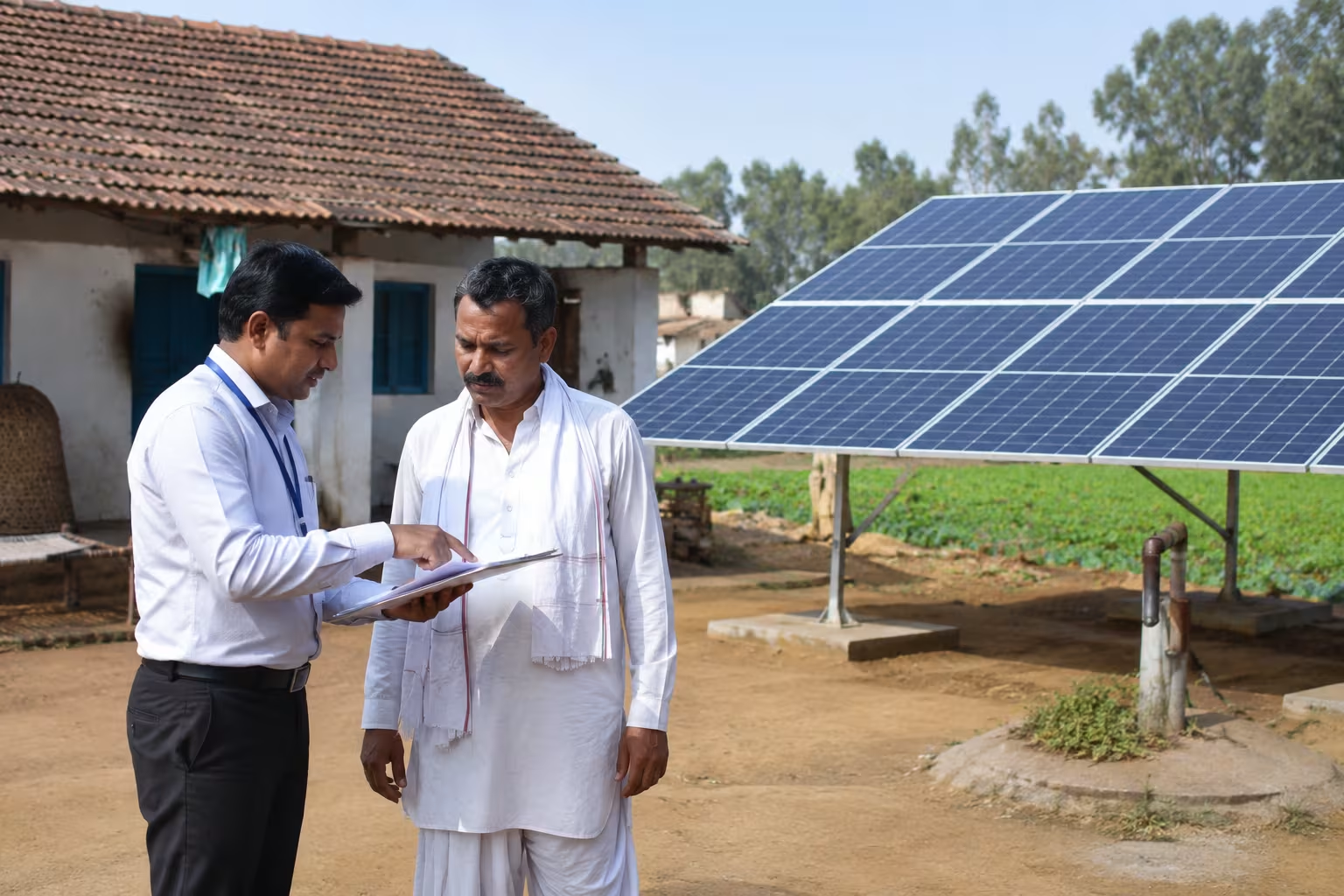
Installing rooftop solar can reduce your dependence on grid electricity and lower your monthly electricity expenses. However, the initial installation cost can make some homeowners delay their decision.
To make residential solar more affordable, the Government of India provides financial support under the PM Surya Ghar: Muft Bijli Yojana. Eligible residential electricity consumers in Madhya Pradesh can receive a subsidy of up to ₹78,000 for an approved grid-connected rooftop solar system.
This guide explains the subsidy amount, eligibility rules, required documents and the complete application process in simple words.
Quick answer: The current subsidy is ₹30,000 for a 1 kW system, ₹60,000 for a 2 kW system and ₹78,000 for a 3 kW or larger residential rooftop solar system. The subsidy is available only after the installation follows the official portal and DISCOM process.
Is a Solar Panel Subsidy Available in Madhya Pradesh?
Yes. Residential electricity consumers in Madhya Pradesh can apply for rooftop solar assistance under the PM Surya Ghar: Muft Bijli Yojana.
This is a Central Government scheme implemented through the National Portal and the consumer’s electricity distribution company, commonly called the DISCOM. The scheme was approved in February 2024 and is scheduled to remain under implementation until March 31, 2027. It therefore remains active in 2026.
The subsidy on solar panels in MP is mainly available for grid-connected residential rooftop systems. It is not the same as a solar-pump subsidy, an agricultural scheme or a commercial solar incentive.
To receive the benefit, the consumer must:
- Apply through the official PM Surya Ghar portal
- Use a vendor registered on the National Portal
- Install eligible solar modules and equipment
- Complete the required DISCOM inspection and metering process
- Submit valid bank details for the subsidy payment
Installing solar panels independently and applying for the subsidy afterwards may make the system ineligible.
How Much Solar Subsidy Can You Get in Madhya Pradesh?
The subsidy amount depends on the rated capacity of the solar modules installed on the property.
| Rooftop solar capacity | Applicable Central subsidy |
|---|---|
| 1 kW | ₹30,000 |
| 1.5 kW | ₹45,000 |
| 2 kW | ₹60,000 |
| 2.5 kW | ₹69,000 |
| 3 kW | ₹78,000 |
| More than 3 kW | Maximum ₹78,000 |
For the first 2 kW, the subsidy is calculated at ₹30,000 per kW. For the next 1 kW, it is calculated at ₹18,000 per kW. No additional Central subsidy is provided for capacity above 3 kW.
For example:
- A 1.5 kW system may receive ₹45,000.
- A 2.5 kW system may receive ₹69,000.
- A 3 kW system may receive ₹78,000.
- A 5 kW system may also receive a maximum of ₹78,000.
A larger system can still be useful for a home with high electricity consumption, even though the subsidy does not increase after 3 kW.
Is There an Additional Madhya Pradesh State Subsidy?
The confirmed financial benefit available to eligible households in Madhya Pradesh is the Central assistance provided under PM Surya Ghar.
The Central guidelines allow a state government to introduce an additional state subsidy. However, such a benefit requires a separate state framework and official notification.
As of July 2026, homeowners should not calculate their investment on the assumption of an additional Madhya Pradesh state subsidy unless it is clearly shown on the official PM Surya Ghar portal, the relevant MP DISCOM portal or a current government order.
This helps avoid misleading offers that promise a larger subsidy without official proof.
Who Is Eligible for the Solar Panel Subsidy in Madhya Pradesh?
A homeowner does not receive the solar subsidy only because solar panels have been installed. The consumer, electricity connection, system and application must meet the scheme conditions.
You Must Have a Residential Electricity Connection
The solar plant must be linked to a valid residential electricity connection of the local DISCOM.
The scheme does not provide this household subsidy to:
- Commercial shops
- Offices
- Factories
- Industrial units
- Government electricity connections
- Other non-residential consumer categories
Commercial and industrial properties can still install rooftop solar, but they cannot claim the residential Central Financial Assistance under this part of PM Surya Ghar.
You Must Have a Valid Consumer Number
The applicant needs a valid electricity consumer account number, IVRS number or equivalent consumer ID issued by the electricity distribution company.
The name and consumer details entered on the portal should match the electricity bill. A mismatch can delay the application or bank verification.
The Solar System Must Be Grid-Connected
The subsidy is available for an eligible rooftop solar system connected to the local electricity distribution network.
An off-grid system that works completely separately from the electricity grid is not eligible under the current household subsidy guidelines. Certain grid-connected battery or behind-the-meter arrangements may qualify only when permitted by the relevant electricity regulations and approved by the DISCOM.
The Installation Must Be on an Eligible Structure
The solar panels may be installed on:
- A house roof
- Terrace
- Balcony
- Elevated structure
- Eligible building-integrated solar structure
The plant must be linked to the applicant’s residential electricity connection and accepted by the DISCOM.
The Solar Modules Must Meet DCR Rules
The modules used in a subsidised installation must meet the Domestic Content Requirement, commonly called DCR.
This means the solar modules must be manufactured in India using solar cells manufactured in India. Using non-DCR modules can make the entire installation ineligible for the subsidy.
The modules should also meet the technical and quality requirements applicable to government-supported and net-metered projects.
You Must Use a Registered Vendor
The rooftop system must be installed through a vendor registered on the PM Surya Ghar National Portal.
The consumer and vendor may mutually decide:
- Solar plant size
- System design
- Equipment
- Installation price
- Payment terms
- Additional components
However, the installation must still meet the scheme’s minimum technical specifications.
The Same Installation Cannot Receive the Subsidy Twice
A rooftop solar installation is eligible for Central assistance only once after installation.
If an already subsidised solar system is shifted to another property, the shifted system does not become eligible for a fresh subsidy. An existing subsidised plant that is expanded may qualify only for the eligible balance capacity, subject to the current rules and the overall 3 kW subsidy limit.
Who Is Not Eligible for the Residential Solar Subsidy?
You may not qualify for the subsidy in the following situations:
- Your electricity connection is commercial, industrial or non-residential.
- You install a fully off-grid solar system.
- You use non-DCR solar modules.
- You choose a vendor who is not registered on the National Portal.
- You do not complete the official application process.
- Your system fails the DISCOM inspection.
- The installed capacity or system details do not match the submitted application.
- You have already received the full eligible subsidy for the same installation.
- You submit incorrect consumer, bank or installation details.
- You install the system without following the required approval and commissioning stages.
A household can still install solar without a subsidy. However, it must not claim to be a subsidised PM Surya Ghar installation unless all applicable conditions are met.
Which Solar System Size Should You Choose?
The correct solar capacity depends mainly on your electricity consumption. It should not be selected only according to the maximum subsidy available.
The following table gives a broad starting point:
| Average monthly electricity use | Possible system size |
|---|---|
| Up to 150 units | 1–2 kW |
| Around 150–300 units | 2–3 kW |
| More than 300 units | Above 3 kW |
These are only general estimates. Your final capacity should be calculated after reviewing:
- Electricity use over the last 12 months
- Daytime electricity consumption
- Available shadow-free roof space
- Sanctioned electrical load
- Roof direction and condition
- Future appliances
- Air-conditioner use
- Electric vehicle charging plans
- Expected changes in family electricity use
A family consuming more than 300 units per month may require a system larger than 3 kW. Although the maximum subsidy may remain ₹78,000, the additional capacity can generate more electricity and provide better long-term savings.
How Much Roof Space Is Required?
The exact space requirement depends on the wattage and efficiency of the panels, mounting design and roof layout.
A roof survey should check:
- Shade from nearby buildings
- Trees and water tanks
- Parapet-wall shadows
- Roof strength
- Panel direction
- Maintenance access
- Distance from the inverter and electricity meter
- Safe placement of cables and earthing equipment
Do not cover the entire roof without leaving safe walking and maintenance space.
What Documents Are Required to Apply?
The exact documents requested may depend on the application stage and the DISCOM. Applicants should generally keep the following documents and details ready:
- Latest residential electricity bill
- Electricity consumer or IVRS number
- Aadhaar card or accepted identity proof
- Mobile number
- Email address
- Applicant’s bank account details
- Cancelled cheque, bank statement or passbook copy
- Proof that the bank account belongs to the electricity consumer
- Rooftop or property-use proof, where requested
- Installation documents
- System specifications
- Geo-tagged photographs after installation
- Metering and commissioning documents
The official guidelines require bank-account proof such as a cancelled cheque, bank e-statement or passbook scan showing that the account belongs to the concerned consumer.
The details on the electricity bill, application and bank account should be checked carefully before submission.
How Can You Apply for a Solar Subsidy in Madhya Pradesh?
The consumer must complete the application through the official PM Surya Ghar National Portal. The process includes registration, installation, DISCOM verification and subsidy redemption.
Step 1: Register on the PM Surya Ghar Portal
Start by registering as a consumer on the official portal.
You will normally need to select or enter:
- Madhya Pradesh as the state
- Your electricity distribution company
- Electricity consumer number
- Mobile number
- Email address
Use the DISCOM name and consumer number exactly as shown on your latest electricity bill.
After registration, the portal generates an application ID that can be used to track the application.
Step 2: Submit the Rooftop Solar Application
Log in to the consumer account and submit the rooftop solar application.
Enter the required information, including the proposed solar capacity and electricity-connection details. Upload the requested documents carefully.
Applications for rooftop systems up to 10 kW are covered by simplified feasibility provisions under the Central rules. However, applicants must still follow the process shown by their DISCOM and upload any documents requested under the applicable state system.
Do not begin the installation until the application shows that you can proceed.
Step 3: Complete the Required DISCOM Process
The relevant electricity distribution company checks the application according to the current procedure.
Depending on the system and portal workflow, this may include:
- Consumer-detail verification
- Connection and sanctioned-load checks
- Technical feasibility
- Metering requirements
- Required corrections
If the DISCOM asks for a correction, complete it before moving ahead.
Step 4: Select a Registered Solar Vendor
Choose a vendor registered on the PM Surya Ghar portal for Madhya Pradesh.
The final price is mutually decided between the consumer and vendor. It is not automatically fixed only because the vendor is portal-registered.
Before confirming the installation, make sure the quotation clearly states:
- Solar-module capacity
- Module make and model
- DCR compliance
- Inverter capacity and make
- Mounting structure
- Earthing and safety work
- Installation charges
- Metering support
- Warranty
- Maintenance support
- Total price before subsidy
- Items that cost extra
Step 5: Install the Rooftop Solar System
The registered vendor installs the solar system according to the agreed design and applicable technical requirements.
The vendor is also expected to conduct the required safety checks and explain basic maintenance and safe system use to the consumer.
The installed capacity and equipment should match the information submitted on the portal.
Step 6: Upload the Installation Details
After installation, the plant details and required documents must be updated on the portal.
This may include:
- Solar-module details
- Inverter details
- System capacity
- Certificates
- Installation documents
- Geo-tagged photographs
The vendor may assist the consumer, but the consumer should check that every detail is correct before final submission.
Step 7: Complete the DISCOM Inspection and Metering
The DISCOM physically inspects the installed system. It checks whether the solar plant meets the required technical, quality and safety conditions.
The DISCOM may:
- Approve the installation
- Ask for corrections
- Reject the claim with a reason
The required metering arrangement is completed according to the rules applicable in Madhya Pradesh. This may include a net meter or another approved metering system.
The subsidy is processed only after the DISCOM has verified the plant and approved the application on the portal.
Step 8: Submit Bank Details and Redeem the Subsidy
After the system passes inspection, the eligible subsidy amount is activated through the portal process.
The consumer must verify or submit:
- Bank account number
- Account-holder details
- Bank proof
- Other requested payment information
The subsidy is then transferred to the eligible consumer’s bank account. Where the installation has been financed through an eligible linked loan, the amount may first be adjusted against the outstanding loan as provided in the scheme guidelines.
Which DISCOM Handles Solar Applications in Madhya Pradesh?
Madhya Pradesh has three main electricity distribution companies. The correct DISCOM depends on the location of your electricity connection.
They broadly cover the following regions:
- Madhya Kshetra Vidyut Vitaran Company: Central Madhya Pradesh, including areas such as Bhopal and Gwalior
- Poorv Kshetra Vidyut Vitaran Company: Eastern Madhya Pradesh, including areas such as Jabalpur
- Paschim Kshetra Vidyut Vitaran Company: Western Madhya Pradesh, including areas such as Indore and Ujjain
Do not select a DISCOM based only on the city name found online. Check the company name printed on your latest electricity bill.
The Madhya and Poorv Kshetra electricity-company websites currently provide rooftop-solar or PM Surya Ghar services for consumers. The Poorv Kshetra portal also directs subsidy applicants to register through the official PM Surya Ghar portal rather than its non-subsidy application form.
What Happens After You Submit the Application?
The complete process does not end when the online form is submitted.
Your application may move through the following stages:
- Consumer registration completed
- Rooftop application submitted
- DISCOM verification or feasibility process
- Permission to proceed
- Registered vendor selected
- Solar plant installed
- Installation information uploaded
- DISCOM inspection completed
- Metering arrangement completed
- Installation commissioned
- Subsidy request approved
- Bank details verified
- Subsidy processed
The exact wording of the application status may differ on the portal.
An application can remain pending when:
- Documents are incomplete
- The consumer number is incorrect
- The installed plant does not match the application
- Inspection is pending
- Meter installation is pending
- The vendor has not uploaded the required documents
- Bank details do not match
- The system requires technical correction
Check the portal regularly instead of assuming that the vendor or DISCOM has completed every stage.
How Long Does It Take to Receive the Solar Subsidy?
There is no guaranteed total timeline from registration to subsidy payment. The complete duration depends on application approval, installation, inspection, metering and document verification.
However, the PM Surya Ghar operational guidelines state that the Central Financial Assistance should be processed within 15 days after approval by the concerned DISCOM.
This 15-day period does not begin from the date you first register. It begins after the installation has been completed, physically verified and approved by the DISCOM.
The complete process can take longer when:
- The application contains incorrect information
- Feasibility or connection details require clarification
- Installation work is delayed
- Metering is pending
- The system fails inspection
- Documents need correction
- Bank verification is incomplete
No installer should guarantee a fixed subsidy-credit date before the DISCOM has approved the plant.
What Are the Main Benefits of the Solar Subsidy?
The subsidy reduces the initial investment, but it is not the only benefit of installing rooftop solar.
Lower Initial Cost
The subsidy reduces the effective cost of an eligible residential solar system.
For example, an eligible 3 kW installation can receive up to ₹78,000 after completing the required process. This can make the project more affordable for a household.
Lower Dependence on Grid Electricity
Solar panels generate electricity during daylight hours. The home can use this electricity directly, reducing the number of units purchased from the grid.
Savings depend on:
- Solar generation
- Electricity consumption
- Daytime usage
- System size
- Local electricity tariff
- Roof conditions
- System maintenance
Better Long-Term Value
A properly sized system can continue generating electricity for many years. The subsidy lowers the starting investment, which may improve the project’s payback period.
However, no single payback period applies to every house. It should be calculated using the actual project cost, electricity bill and expected generation.
Benefit of an Approved Metering Arrangement
Under net metering or another approved arrangement, the electricity generated and exported by the rooftop system is recorded according to the applicable state regulations.
The adjustment shown in the electricity bill depends on the metering method and current electricity rules. Solar generation does not automatically mean that every future bill will become zero.
Protection From Rising Electricity Expenses
A household that generates part of its own electricity may be less affected by future increases in grid-electricity costs.
The actual benefit will depend on how much solar electricity the home generates and consumes.
Cleaner Electricity
Rooftop solar generates electricity without burning fuel at the property. It supports the wider use of renewable energy and reduces dependence on conventional power sources.
How Much Does a Solar System Cost After Subsidy?
There is no single government-fixed final price for every rooftop solar installation cost. Under the scheme, the consumer and registered vendor mutually agree on the system design and commercial terms.
The basic calculation is:
Final effective cost = Total project cost − Approved subsidy
| Solar capacity | Maximum Central subsidy | Effective cost |
|---|---|---|
| 1 kW | ₹30,000 | Quoted cost minus ₹30,000 |
| 2 kW | ₹60,000 | Quoted cost minus ₹60,000 |
| 3 kW | ₹78,000 | Quoted cost minus ₹78,000 |
| 5 kW | ₹78,000 | Quoted cost minus ₹78,000 |
The total project price can change based on:
- Panel technology and wattage
- Inverter type
- Mounting structure
- Roof height
- Roof condition
- Additional civil work
- Cable length
- Earthing
- Lightning protection
- Metering-related scope
- Battery storage
- Monitoring system
- Warranty and maintenance services
The subsidy is normally received after approval. Therefore, confirm whether the quotation requires you to pay the complete project price first or whether an eligible financing arrangement is being used.
Do not compare quotations only by the amount shown after subsidy. First compare the full system specifications and total price before subsidy.
Can Apartments and Housing Societies Receive a Subsidy?
Yes, eligible Group Housing Societies and Resident Welfare Associations can receive Central assistance for rooftop solar systems used for common facilities.
Eligible common uses may include:
- Common-area lighting
- Lifts
- Water pumps
- Clubhouse facilities
- Common EV charging
- Other shared electrical loads
The supported capacity can be up to 500 kW, subject to a limit of 3 kW per house and adjustment for individual subsidised rooftop systems already installed by residents. The applicable assistance for eligible common-facility capacity is ₹18,000 per kW under the current general-state structure.
The society’s common electricity connection should be used for common facilities. It should not be used to provide direct electricity supply to individual residential consumers under this provision.
An individual apartment owner may face additional practical requirements, such as rooftop rights, society approval and a suitable electricity connection.
Is the Subsidy Available for Commercial or Industrial Solar Panels?
No. The residential Central Financial Assistance under PM Surya Ghar is not available for commercial or industrial electricity consumers.
This means that the household subsidy cannot be claimed for:
- Shops
- Offices
- Hotels
- Hospitals under commercial connections
- Factories
- Warehouses
- Industrial units
- Commercial buildings
Such properties may still benefit from rooftop solar through reduced grid-electricity use. Their financial calculation should be based on electricity tariffs, system cost, tax treatment where applicable and expected generation—not the residential ₹78,000 subsidy.
Can You Get a Subsidy for a Solar System With a Battery?
A rooftop solar installation may include battery storage or other additional components. However, the subsidy is calculated only according to the eligible rated capacity of the solar modules.
Adding a battery does not increase the Central subsidy.
For example, a 3 kW rooftop solar system with battery storage can still receive a maximum eligible solar subsidy of ₹78,000, not a separate subsidy for the battery.
The complete system must also meet the required technical and grid-connection conditions. A fully off-grid solar-and-battery system is not eligible under the current residential CFA guidelines.
What Common Mistakes Can Delay or Reject an Application?
Many delays happen because small application and installation details are ignored.
Selecting the Wrong DISCOM
Always choose the electricity company shown on your bill. Selecting the wrong distribution company can stop the consumer number from being verified.
Entering Incorrect Consumer Details
The name, consumer number and connection details should match the electricity bill. Avoid spelling mistakes and incomplete numbers.
Installing Before Following the Portal Process
Do not assume that any existing installation can later be converted into a subsidised project. Register and follow the official process before installation.
Using Non-DCR Modules
Non-DCR modules make an installation ineligible for Central assistance under the scheme.
Choosing an Unregistered Vendor
The vendor must be registered on the National Portal for the subsidised installation.
Installing a Different Capacity
The actual installed capacity should match the approved and uploaded information. Any change should be handled through the correct portal process.
Uploading Unclear Documents
Blurred electricity bills, unreadable bank proof or incomplete photographs can delay verification.
Providing the Wrong Bank Account
The bank proof should show that the account belongs to the concerned consumer. Check the account number, IFSC and account-holder name.
Ignoring Inspection Corrections
If the DISCOM identifies a safety, technical or documentation issue, it must be corrected before the installation can be approved.
Assuming the Subsidy Makes Electricity Completely Free
A solar system may reduce energy charges, but a consumer can still receive a bill because of:
- Fixed charges
- Taxes and duties
- Minimum charges
- Meter charges
- Grid electricity used at night
- Consumption above solar generation
- Adjustments under the applicable billing rules
How Can Sun Heaven Energy Help With the Subsidy Process?
Sun Heaven Energy helps homeowners in Madhya Pradesh with:
- Electricity bill and rooftop assessment
- Suitable solar system size and subsidy calculation
- Documentation and portal support
- Solar installation, inspection and net metering
- Post-installation assistance
Recommendations are based on your electricity use, roof space and future requirements—not only on the maximum subsidy.
Share your latest electricity bill to estimate the required capacity, subsidy, solar generation and investment. Call +91 76919 10840 or contact Sun Heaven Energy.
Final eligibility and subsidy payment remain subject to the PM Surya Ghar rules and DISCOM approval.
Frequently Asked Questions
What is the maximum subsidy on solar panels in MP?
The maximum Central subsidy for an individual residential rooftop solar system is currently ₹78,000. It applies to an eligible 3 kW or larger installation. Capacity above 3 kW does not receive additional Central assistance.
How much subsidy is available for a 2 kW solar system in Madhya Pradesh?
An eligible 2 kW residential rooftop solar system can receive ₹60,000. The amount is calculated at ₹30,000 per kW for the first 2 kW.
How much subsidy can I get for a 5 kW solar system?
An eligible 5 kW residential system can receive a maximum of ₹78,000. The remaining capacity above 3 kW does not receive additional Central subsidy.
Can a tenant apply for the solar subsidy?
A tenant may face practical and documentation requirements because the solar installation must be connected to a valid residential electricity connection and installed on an eligible rooftop.
The tenant may need the property owner’s permission, rooftop-use rights and matching consumer details. Final eligibility depends on the documents accepted by the portal and DISCOM.
Can I install solar panels first and apply for the subsidy later?
You should not install the system first and assume the subsidy can be claimed later. Register on the official portal and complete the required process before installation.
A system installed outside the prescribed process may not qualify.
Is the subsidy available for an off-grid solar system?
No. A fully off-grid installation is not eligible for the residential Central Financial Assistance under the current guidelines. The scheme primarily supports eligible grid-connected rooftop solar systems.
Is the subsidy paid to the homeowner or the vendor?
Under the current portal process, the approved subsidy is transferred to the eligible consumer’s verified bank account. If the consumer has used an eligible linked loan, the amount may be adjusted against the outstanding loan according to the scheme process.
Is a net meter required?
The installation must complete the metering arrangement approved under the applicable Madhya Pradesh electricity rules. For a standard grid-connected rooftop system, this generally involves net metering or another approved meter arrangement completed through the DISCOM.
Can a housing society apply for solar assistance?
Yes. Eligible housing societies and RWAs can receive assistance for rooftop solar used for common facilities, subject to the prescribed capacity limits and connection conditions.
Is the ₹78,000 subsidy available for commercial solar?
No. The ₹78,000 household subsidy is not available for commercial or industrial electricity connections. It is meant for eligible residential consumers.
Does PM Surya Ghar guarantee 300 free electricity units?
The scheme aims to help households generate enough solar electricity to receive free or low-cost electricity of up to 300 units per month. It does not mean every registered household automatically receives 300 free grid units.
The result depends on the installed capacity, sunlight, actual generation, household consumption and applicable billing arrangement.
Does a 3 kW solar system always make the electricity bill zero?
No. A bill may continue because of fixed charges, taxes, night-time grid use, higher consumption, seasonal changes or lower solar generation.
A proper electricity-bill and site assessment is needed before estimating savings.